14 hr
Meteora Monasteries Full-Day Tour from Athens
- Expert local guide
- Small group
- Skip-the-line access
- Free cancellation
Meteora Day Trip from Athens by Train – Reserved Rail Journeys
Byzantine monasteries perched on sandstone pillars, reached by morning rail through Thessaly's plains
Compare fares, pick the fit — all bookings are mobile-voucher and eligible for free cancellation where shown.
14 hr
14 hr
14 hr
| Experience | From | Duration | Rating | Transfers | Skip-the-line | Guide | Price | |
|---|---|---|---|---|---|---|---|---|
|
Guided Experience
Most popular
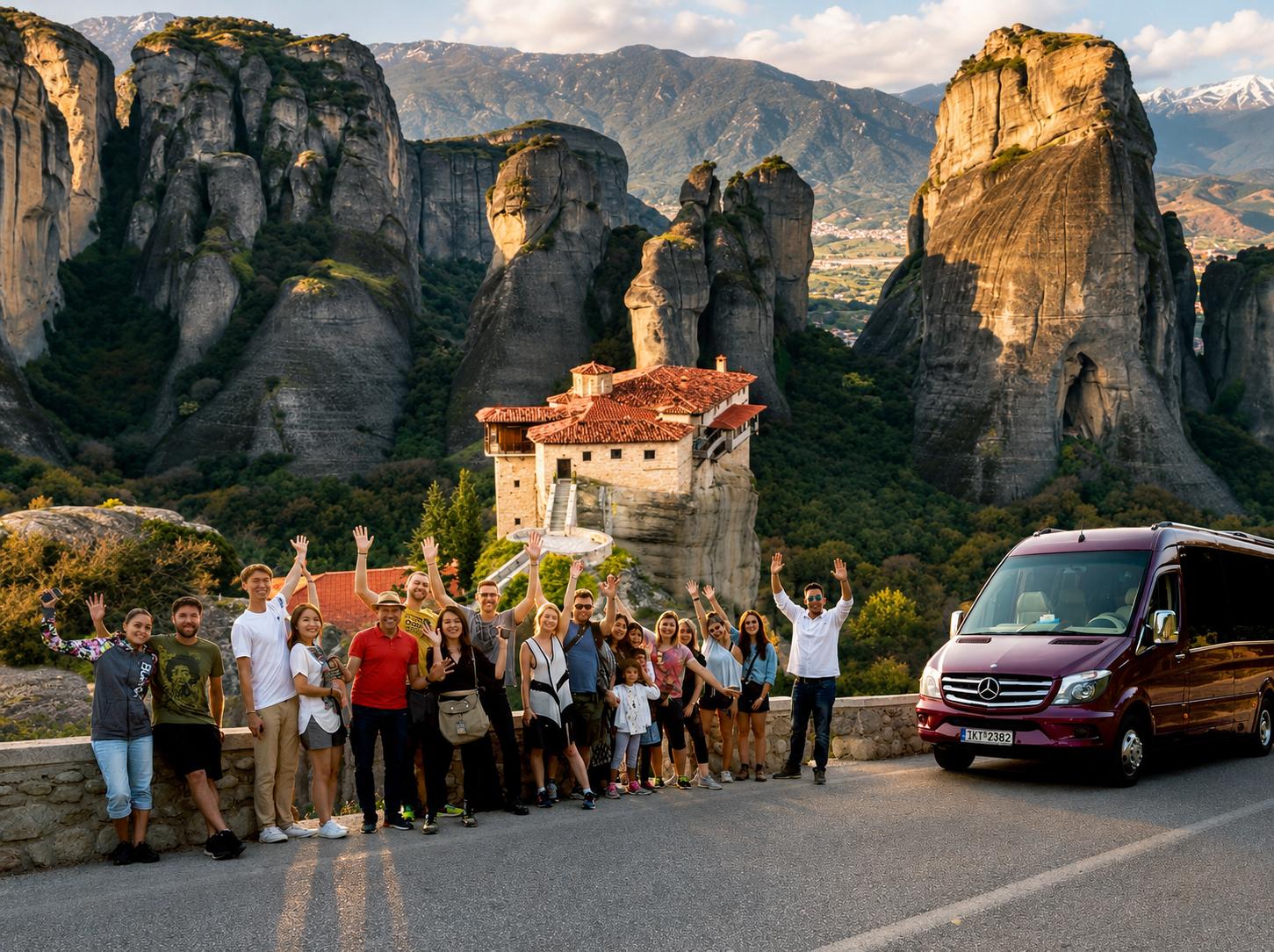
Meteora Monasteries Full-Day Tour from Athens
|
Athens | 14 hr | ★ 4.7 | ✓ | ✓ | ✓ | $96 | Book → |
|
Guided Experience
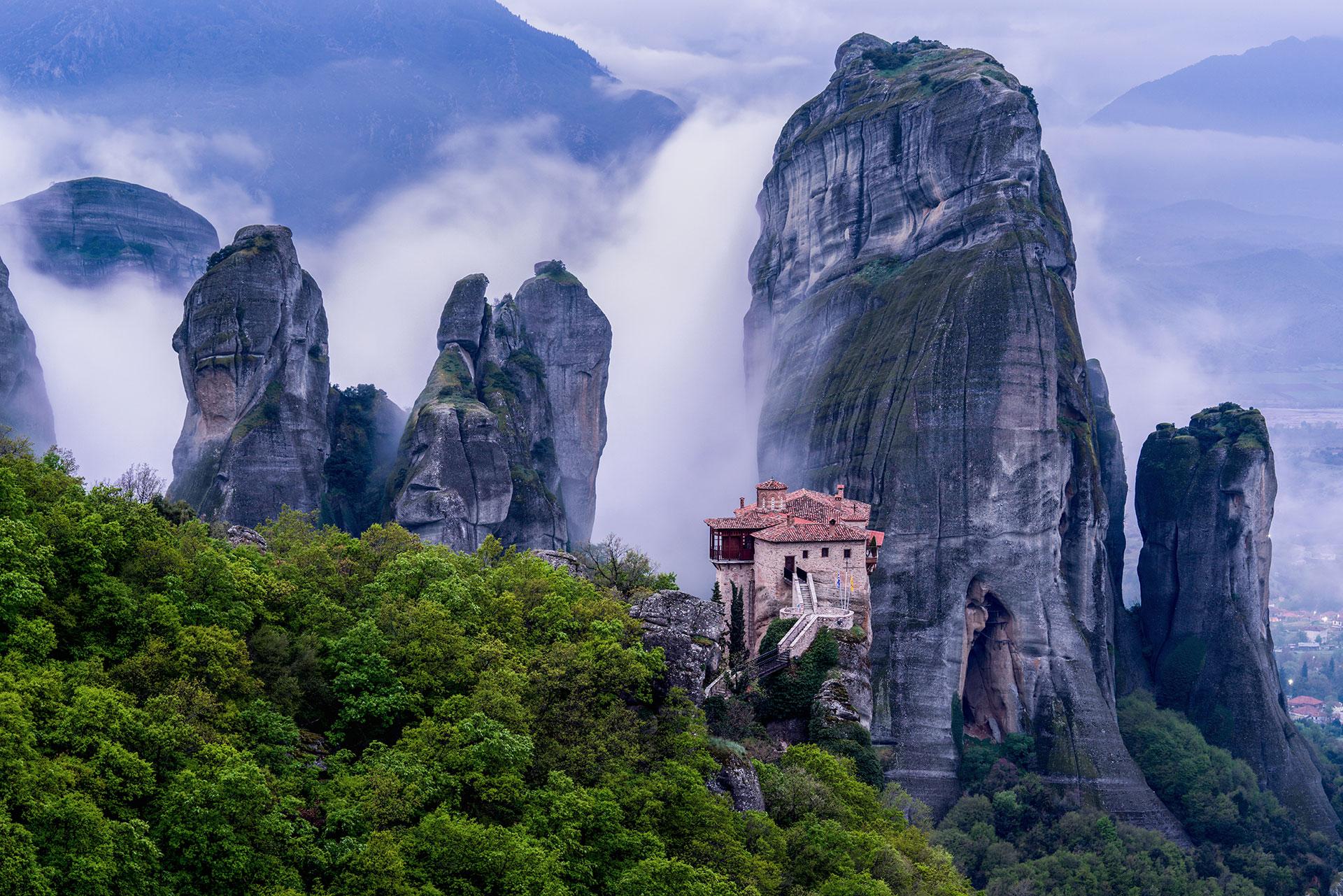
Meteora Monasteries Day Trip from Athens
|
Athens | 14 hr | ★ 4.7 | ✓ | ✓ | ✓ | €84 | Book → |
|
Guided Experience
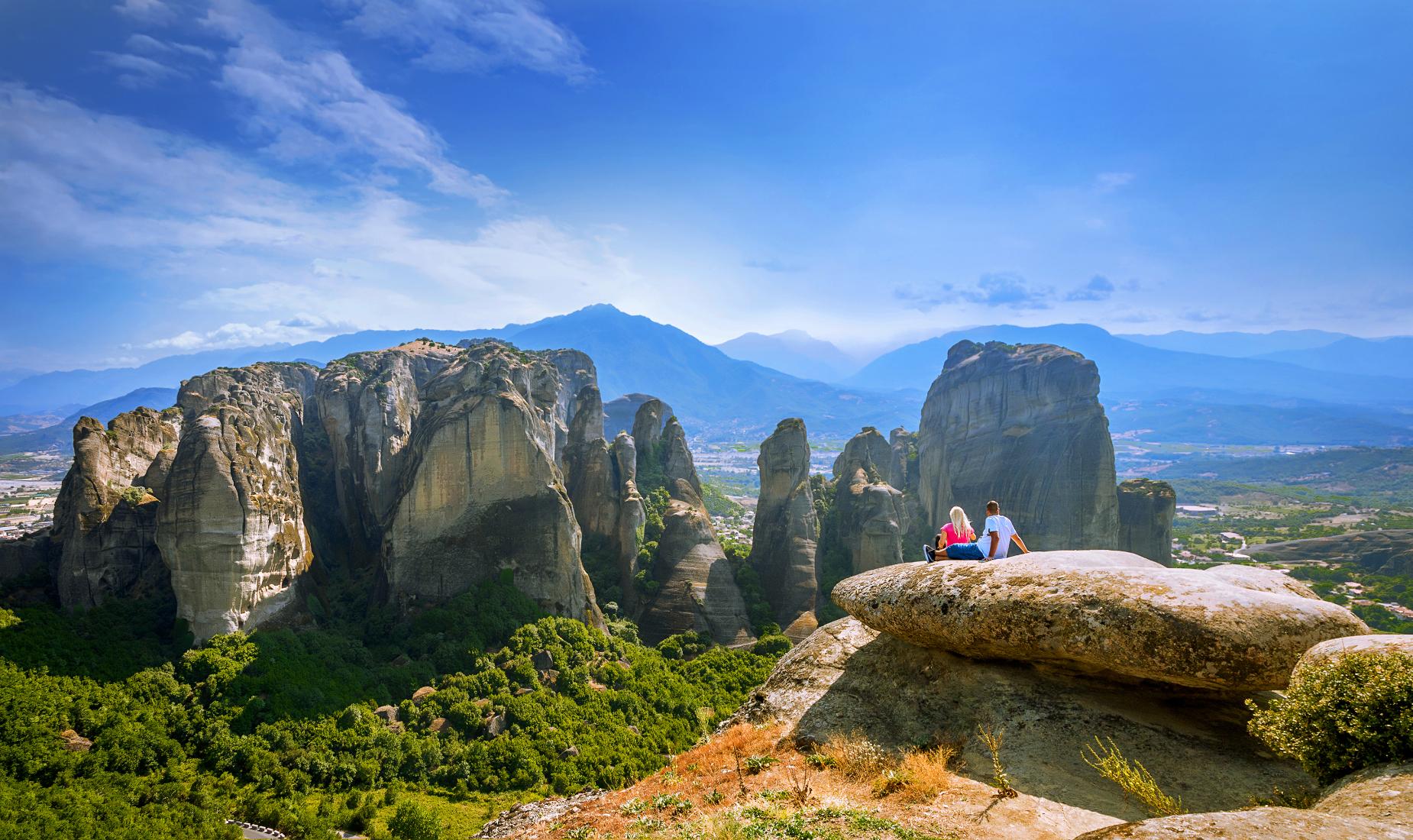
Full-Day Meteora Monasteries Tour from Athens with Live Guide
|
Athens | 14 hr | ★ 4.8 | ✓ | ✓ | ✓ | $85 | Book → |
Worth it for cultural depth seekers
A meteora day trip from athens by train demands roughly 14 hours door-to-door—nine hours on rail, five exploring the clifftop monasteries—but the on-site cost remains modest at just 5 EUR per monastery visited. The value proposition hinges on whether UNESCO-listed Byzantine heritage justifies the travel commitment: you'll witness 14th-century frescoes, working monastic communities, and Thessalian Plain vistas accessible only by ascending 300 steps per site. Organized tours with live guides handle logistics (station transfers, monastery schedules, conservation fees) so you avoid routing puzzles on arrival. This rail-based day trip to Meteora works best for travelers prioritizing cultural immersion over convenience—the rock-pillar monasteries and painted chapels deliver substance that Athens' classical ruins don't duplicate, though the journey itself consumes half your waking day.
Bottom line: Book meteora day trip from athens by train tours if Byzantine heritage outweighs the half-day rail investment—skip if Athens sightseeing is your priority.
Meteora wins on dramatic landscape and visual scale, while a Delphi day trip from Athens by train or coach provides a more manageable, history-rich experience.
|
Top pick Meteora |
Delphi | |
|---|---|---|
| Travel time (one way) | 4.5–5 hours | 2.5–3 hours |
| Primary landscape | Sandstone rock pillars | Mount Parnassus slopes |
| Main historical draw | 14th-century monasteries | Ancient Oracle sanctuary |
| Best for | Photography and hiking | History and mythology enthusiasts |
| Ease of day trip | Exhausting (long travel) | Manageable (closer proximity) |
| Cultural focus | Byzantine religion | Classical antiquity |
| See tickets & prices |
Verdict: Choose the meteora day trip from athens by train tour if you prioritize natural wonders, or select a Delphi excursion for a historically dense, less time-intensive outing.
Hand-picked experiences loved by thousands of travelers
14 hours
Free Cancellation
Discover ancient clifftop monasteries and hermit caves on a guided day trip from Athens by train
14 hours
Free Cancellation
Journey to UNESCO-listed Meteora to explore ancient monasteries perched atop dramatic rock formations
14 hours
Free Cancellation
Journey to UNESCO-listed Meteora's clifftop monasteries with coastal stops, cave exploration, and expert guiding
14 hours
Free Cancellation
Discover six cliff-top monasteries and explore three interiors on a small-group journey to UNESCO-listed Meteora.
2 days
Free Cancellation
Escape Athens by train for two days exploring clifftop monasteries, hermit caves, and Byzantine history
2 days
Free Cancellation
Discover Greece's cliff-top monasteries on a two-day escape featuring guided sunset views, hiking trails, and coastal stops.
14 hours
Free Cancellation
Journey to UNESCO-listed Meteora to discover ancient monasteries perched atop dramatic rock formations
14 hours
Free Cancellation
Journey to ancient battlefields and clifftop monasteries on this full-day private excursion through history
Depart Athens via rail to Kalabaka
Guided exploration of cliffside structures
Travel back to Athens by train
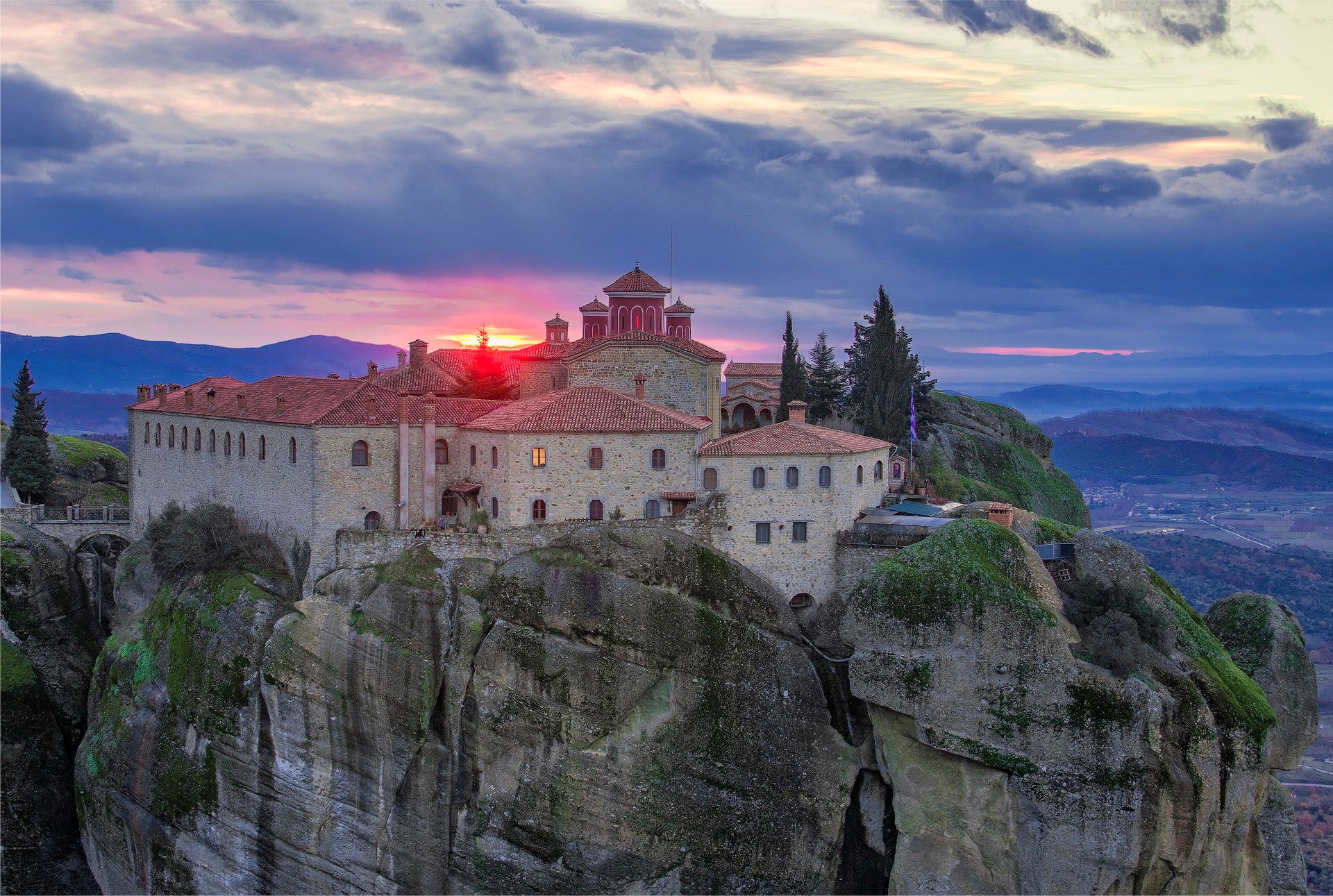
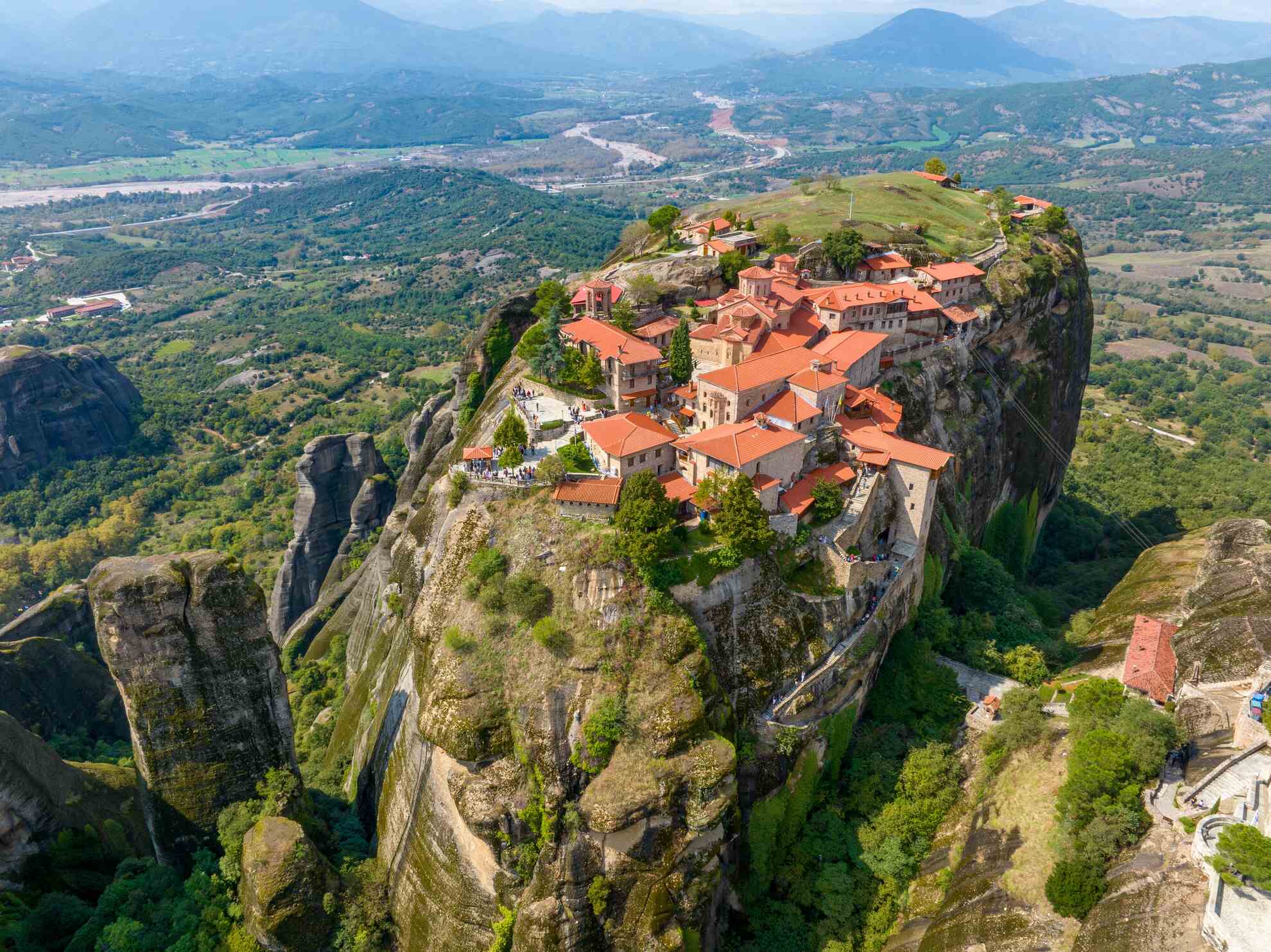
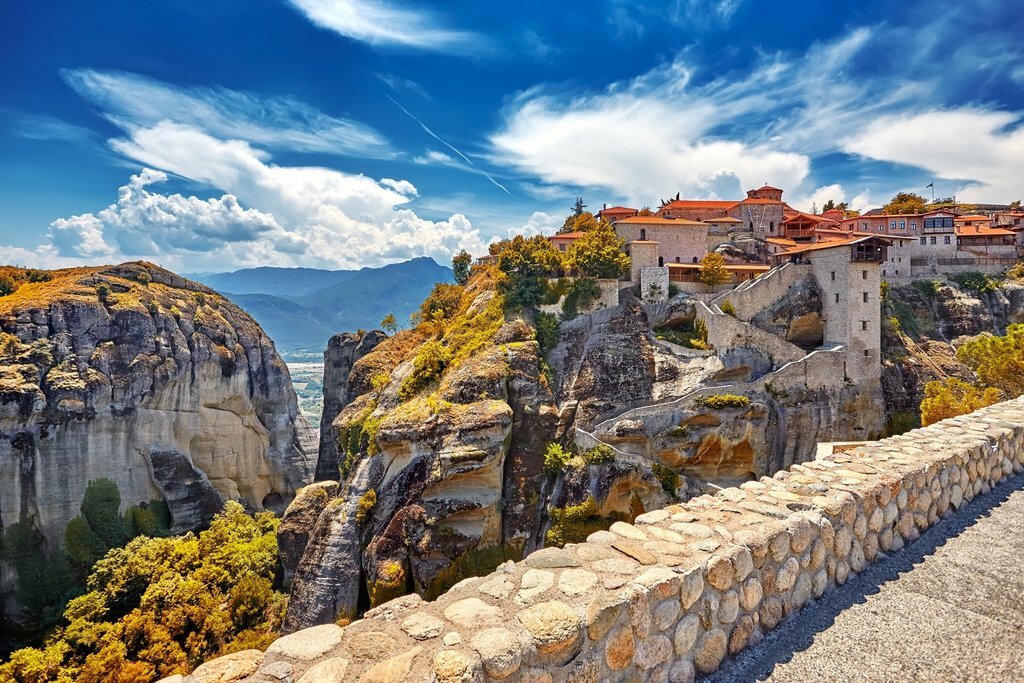
The largest and oldest monastery in the complex, founded in the 14th century.
Features a 16th-century tower and ornate frescoes within its katholikon.
Known for its precarious position on a narrow rock pinnacle.
Reached via 300 steps, this monastery offers wide views of the valley.
Famous for its vertical architecture and beautiful iconography.
You board the Athens train before dawn, settling into a second-class carriage as the city's orange streetlights fade into pre-sunrise grey. The rail line curves north through Boeotia, past whitewashed villages and irrigated fields, then climbs into the Pindus foothills.
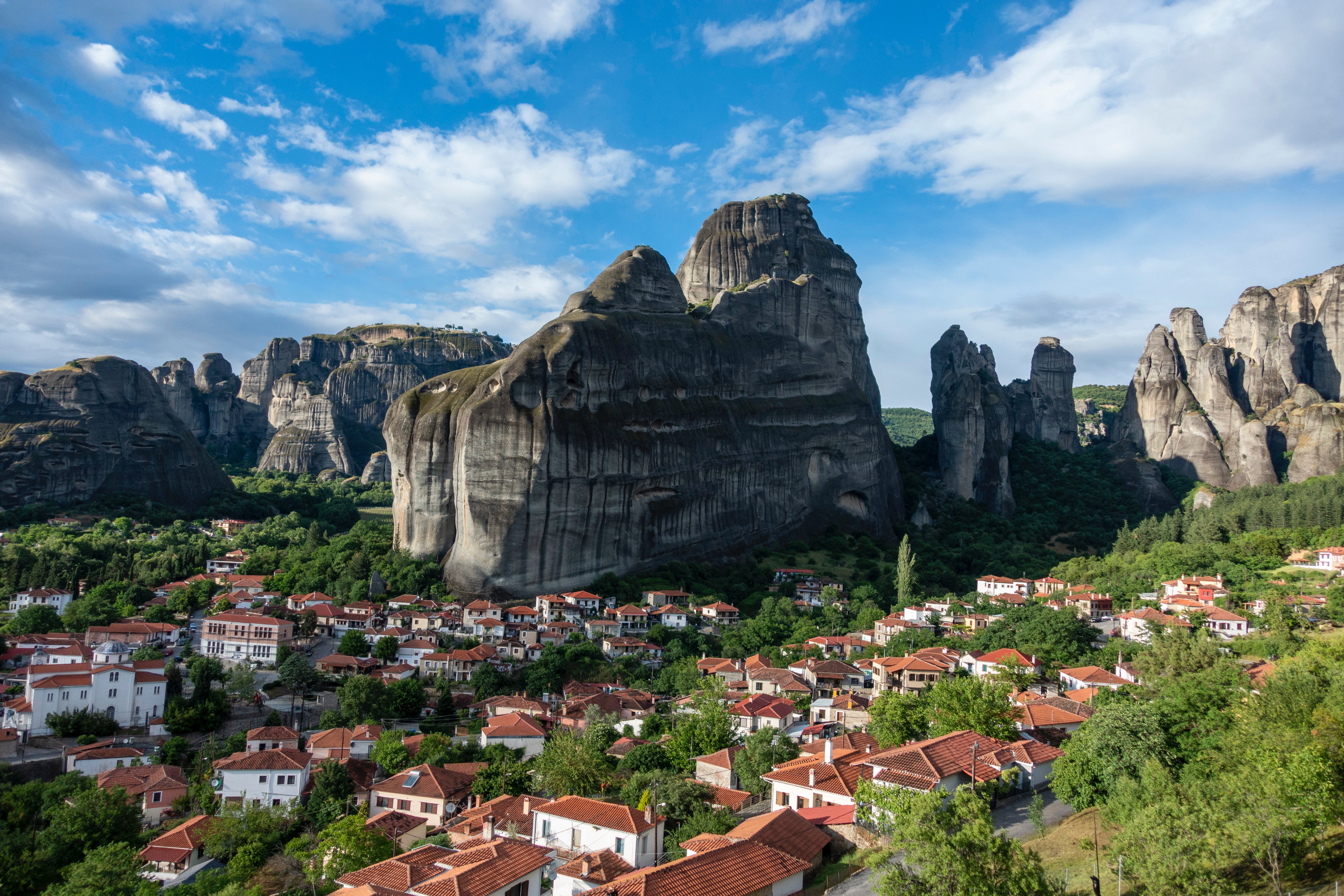
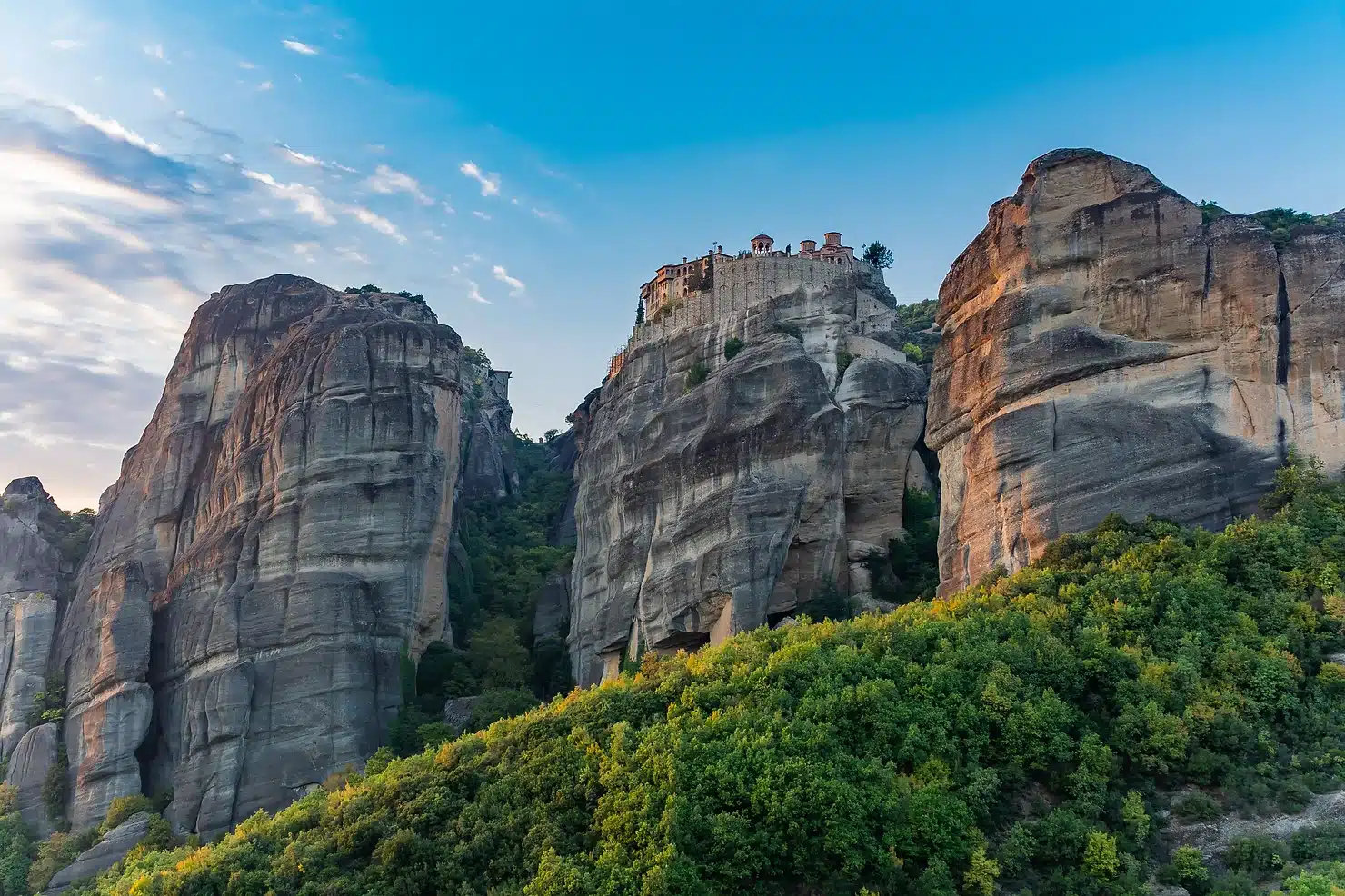
Four hours later, the sandstone pillars of Meteora appear without preamble — vertical, improbable, crowned with terracotta roofs.
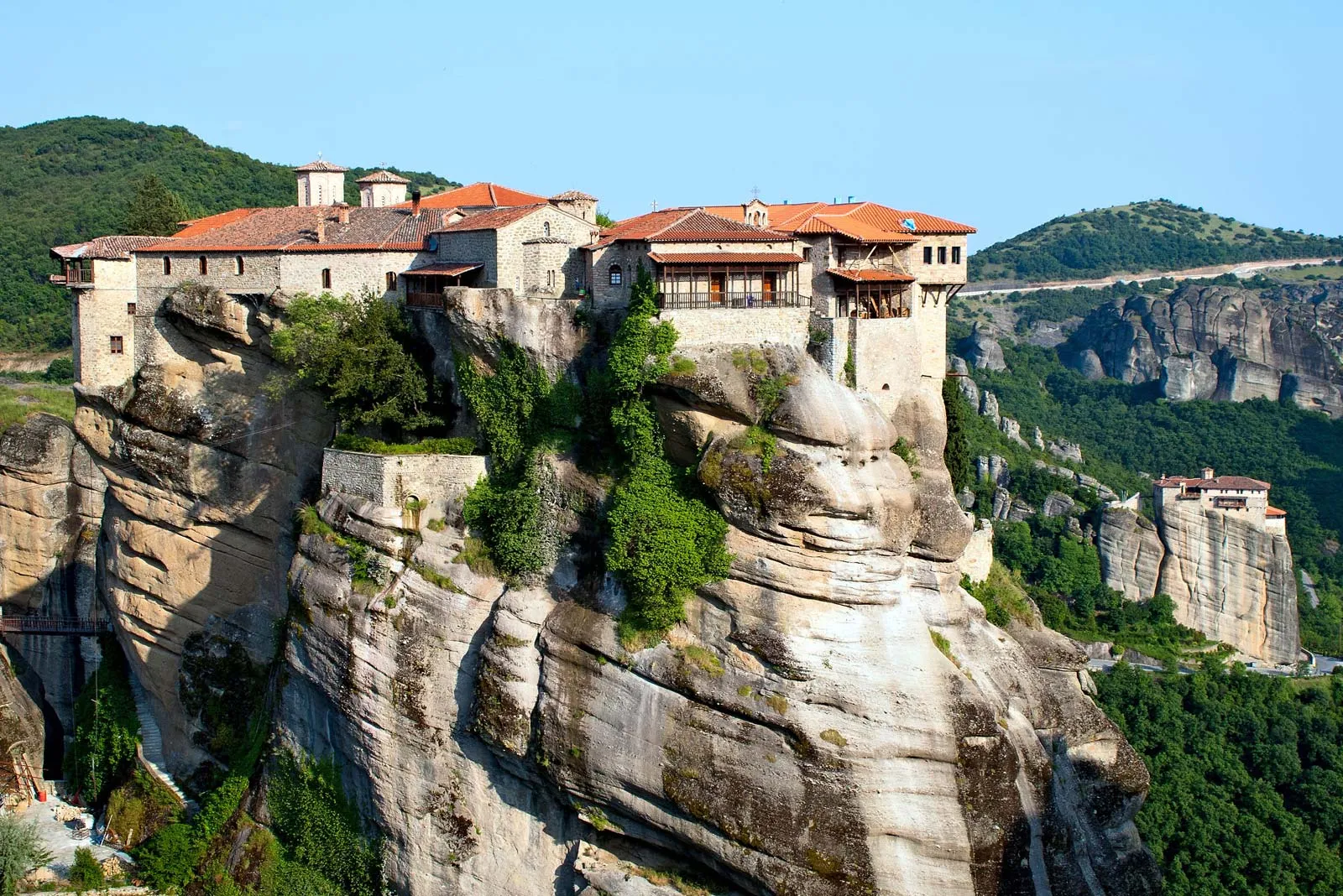
Your guide meets you at Kalabaka station and drives a narrow switchback road to the first monastery. You climb three hundred stone steps, pausing at the halfway landing to look down at the valley floor now far below. Inside, the katholikon is dim and cool; frescoes cover every surface, their ochres and cobalts still vivid despite six centuries of candle smoke. You move through the refectory, past wooden tables scarred by decades of use, then out to a courtyard terrace where the view stretches across the entire Thessalian plain.
The second and third monasteries follow the same rhythm: ascent, ticket booth, interior silence. By early afternoon you stop in Kalabaka for lunch — grilled lamb, village salad, local wine — before the return train departs at three. The light has shifted; the rocks glow amber in the slanting sun. You reach Athens after dark, the city's sprawl a sudden shock after a day spent among cliffs and clouds.
All the details about your upcoming adventure in one place
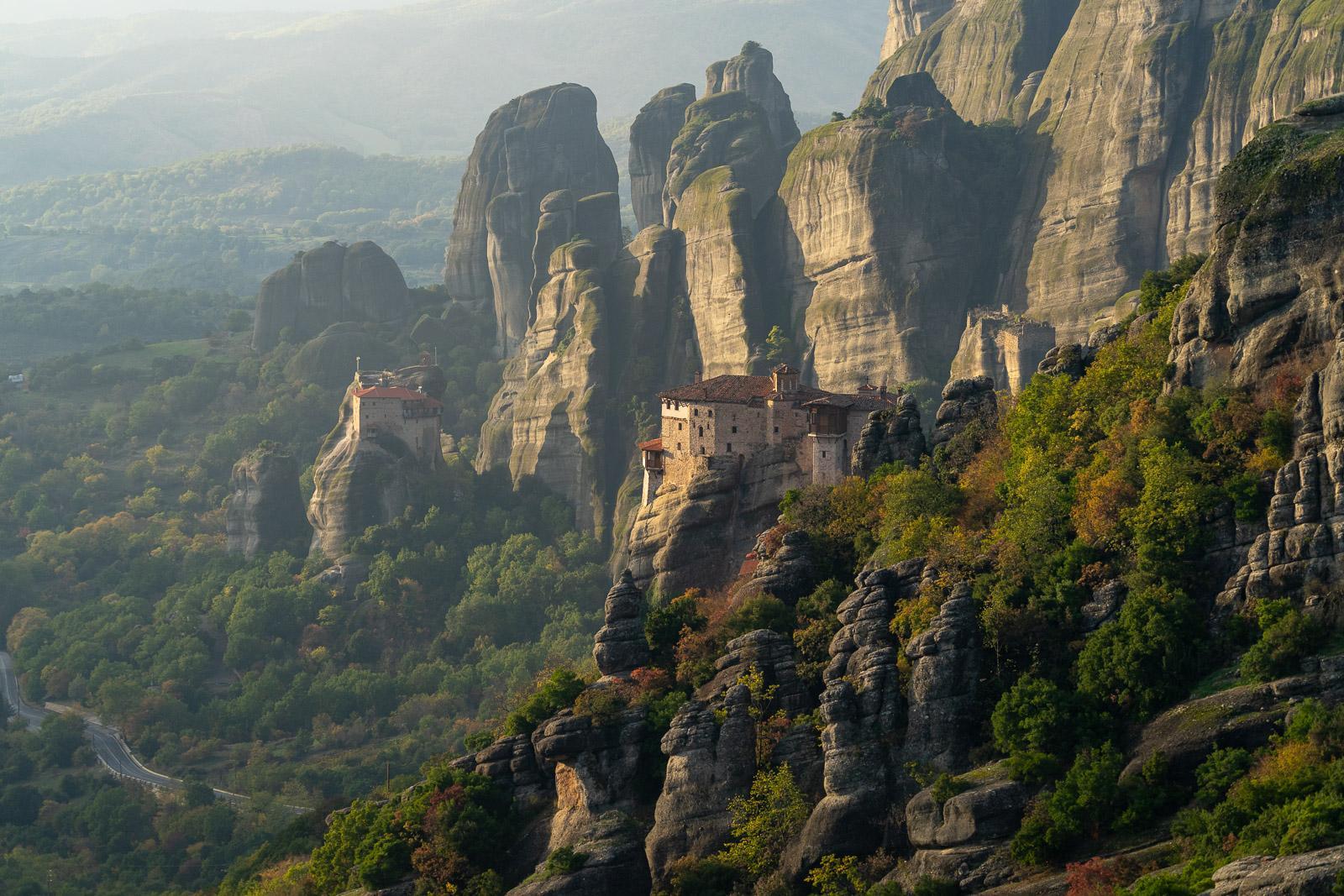
The rail line from Athens to Kalabaka — gateway to Meteora — opened in 1886, linking the capital to Thessaly's grain plains and the sandstone towers that rise without warning from the Pineios valley floor.
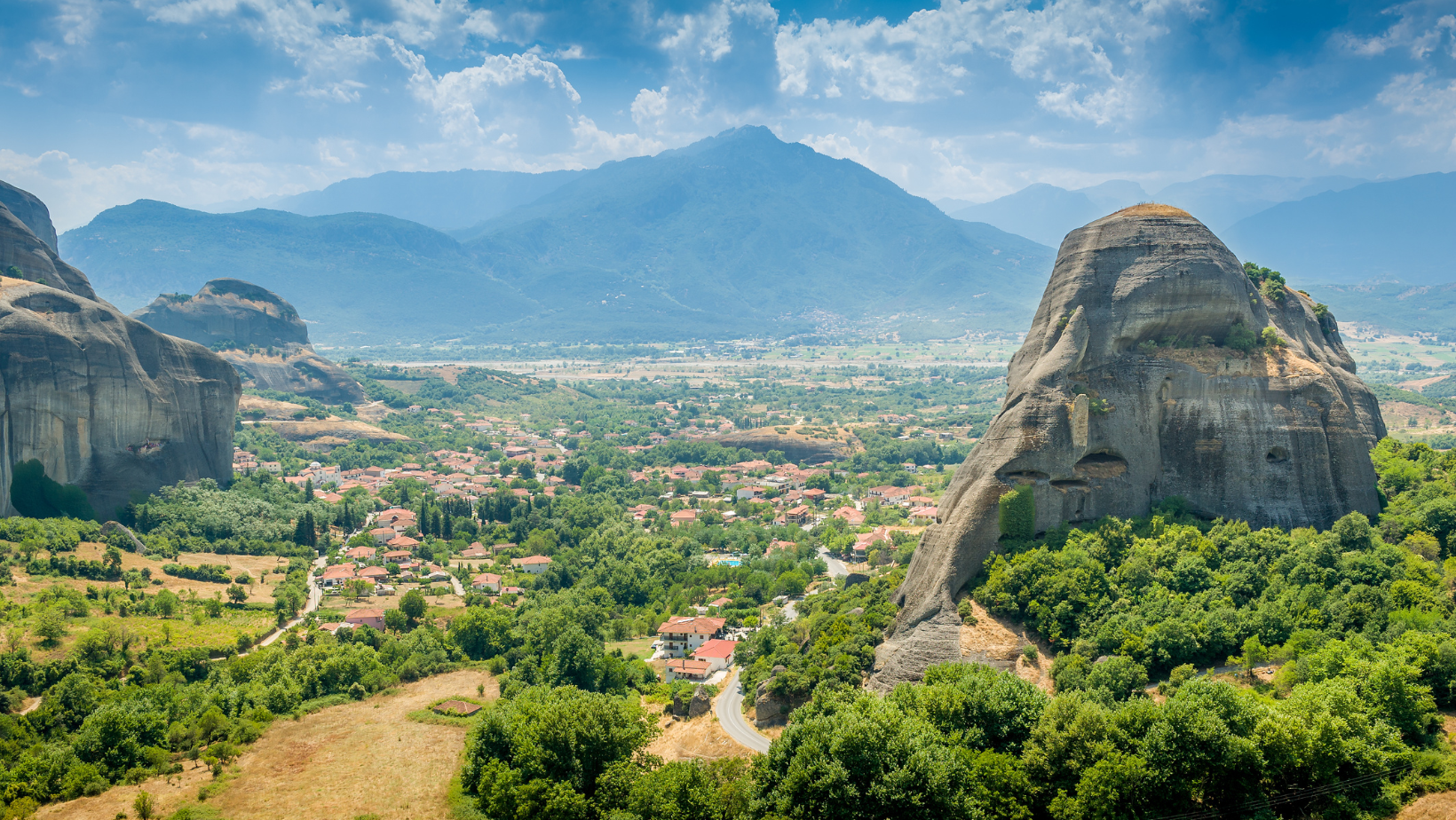
Six active monasteries remain from the twenty-four that once crowned these geological anomalies, each perched between sixty and four hundred metres above the valley. The formations themselves are conglomerate rock: river sediment compressed over sixty million years, then thrust upward and carved by wind and water into fluted columns that defy intuition.
Monastic life began here in the ninth century when hermits occupied natural caves, but the first monastery — Megalo Meteoro — was not founded until 1356, during Ottoman expansion. Builders hauled stone, timber, and frescoes up vertical cliffs using nets and winches, a process that continued for centuries. Today's access stairways, cut into the rock in the 1920s, replaced rope ladders and basket hoists. Each monastery charges a five-euro conservation fee; interiors hold post-Byzantine frescoes, hand-copied liturgical manuscripts, and refectories where communal meals were taken in silence.
The journey itself — four and a half hours by regional train — crosses the Boeotian plain, skirts Mount Parnassus, and threads through the Vale of Tempe before arriving in Kalabaka, the valley town beneath the towers. Most Meteora day trip from Athens by train tours depart Larissa Station before eight in the morning, allocate six hours for monastery visits and lunch, then return passengers to Athens by late evening. The route is scenic in its plainness: olive groves give way to tobacco fields, then to the abrupt verticality of the Pindus foothills.
Visitors ascend an average of three hundred steps to reach monastery thresholds. Dress codes are enforced — shoulders and knees covered, skirts provided at entrances for those in shorts. Photography is prohibited inside katholikons, the main churches, to preserve fourteenth- and fifteenth-century pigments. The six monasteries open daily from nine to four, though each closes one weekday in rotation. Timing matters: coach groups from Thessaloniki arrive mid-morning, so rail travellers booking the earliest departure gain an hour of relative solitude before the valley fills.
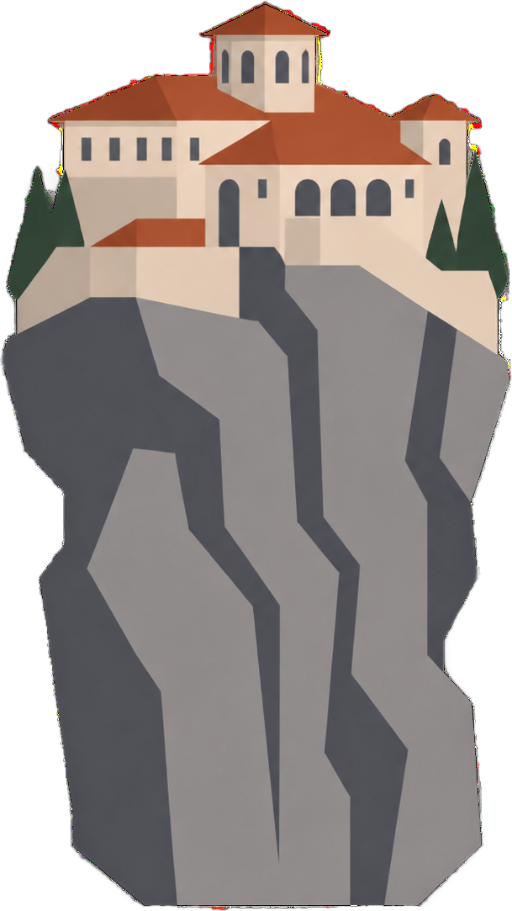
Builders hauled stone, timber, and frescoes up vertical cliffs using nets and winches, a process that continued for centuries.
Visitors must dress modestly to enter the religious sites. Shoulders must be covered and long trousers or skirts are required for a meteora day trip from athens by train.
Large backpacks and bulky luggage are prohibited inside the monastery interiors. Security staff may inspect bags upon entry to any monastery visited during your meteora day trip from athens by train.
Photography is permitted in most outdoor areas, but strictly prohibited inside the main monastery churches. Always look for signage before using cameras during your meteora day trip from athens by train.
Children are welcome but must be supervised at all times due to uneven paths and exposed edges. A meteora day trip from athens by train is better suited for older children comfortable with walking.
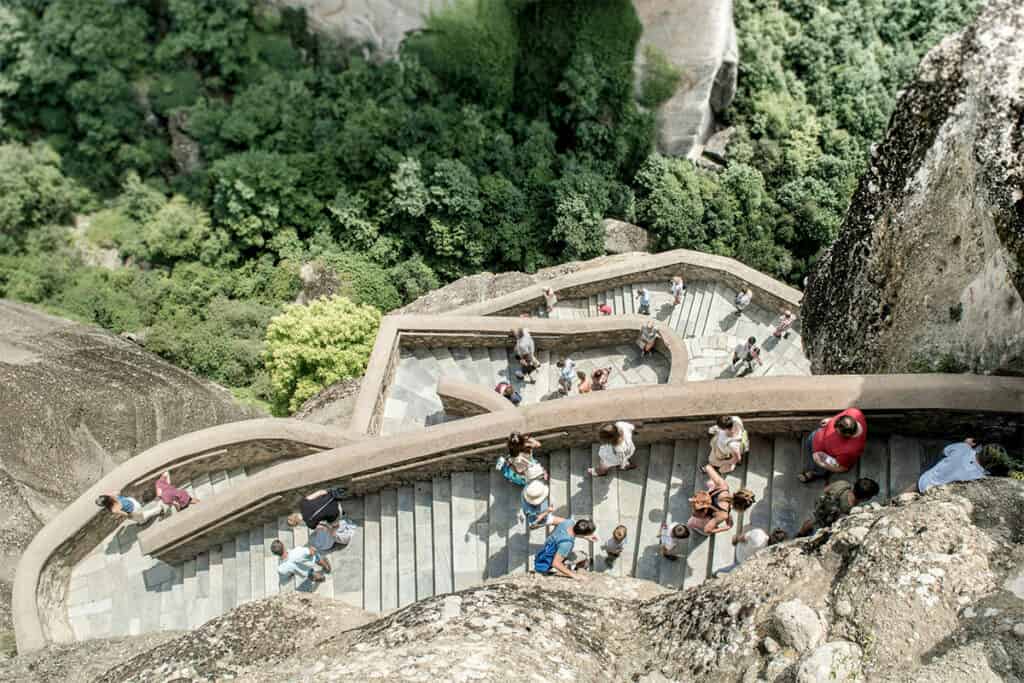
The monasteries are carved into sandstone pillars and involve navigating 300 stone steps. Access is challenging for those with limited mobility.
Consuming food and beverages inside the monastery buildings is forbidden. Carry a refillable water bottle, as the climate during a meteora day trip from athens by train can be warm.
Opening Hours
09:00–16:00
Address
Kalabaka 422 00, Greece
Step Count
300
Best Arrival
09:00–10:30
Storage
Not available inside monasteries
Official Site
https://www.meteoromonastery.gr
Public transport
Direct rail services connect Athens to Kalabaka station. Check schedules in advance as direct connections are limited.
Full refunds are provided for cancellations made within the specified operator window. All cancellations must account for the 5 EUR conservation fee per person, per monastery.
Recommended time
4-5 hours
Planning a meteora day trip from athens by train requires efficient scheduling to navigate the UNESCO heritage site effectively. The best arrival window is 09:00–10:30, as this timeframe avoids mid-day crowds and coach group arrivals. Visitors should anticipate a 300 step count per monastery, so allocate enough time for transit between these Greek Orthodox landmarks. Securing your meteora day trip from athens by train tickets in advance ensures you can prioritize early access, while those requiring meteora day trip from athens by train tours should check availability for mid-week departures.
Crowd levels through the day
Weather · crowds · average price — dots go green to amber to red as each metric rises.
Mild temperatures and blooming landscapes make this an ideal time for a meteora day trip from athens by train.
Expect high temperatures and peak tourist crowds during these months.
Pleasant weather and fewer crowds characterize September and October visits.
Cold temperatures, though the monasteries remain open with smaller groups.
Target the 09:00–10:30 window to beat the coach crowds.
Ensure you have exact change for the 5 EUR conservation fee at each entrance.
Wear shoes with high traction for the 300 steps access path.
Capture panoramic shots from the exterior viewing platforms.
Always book return train tickets well in advance during peak season.
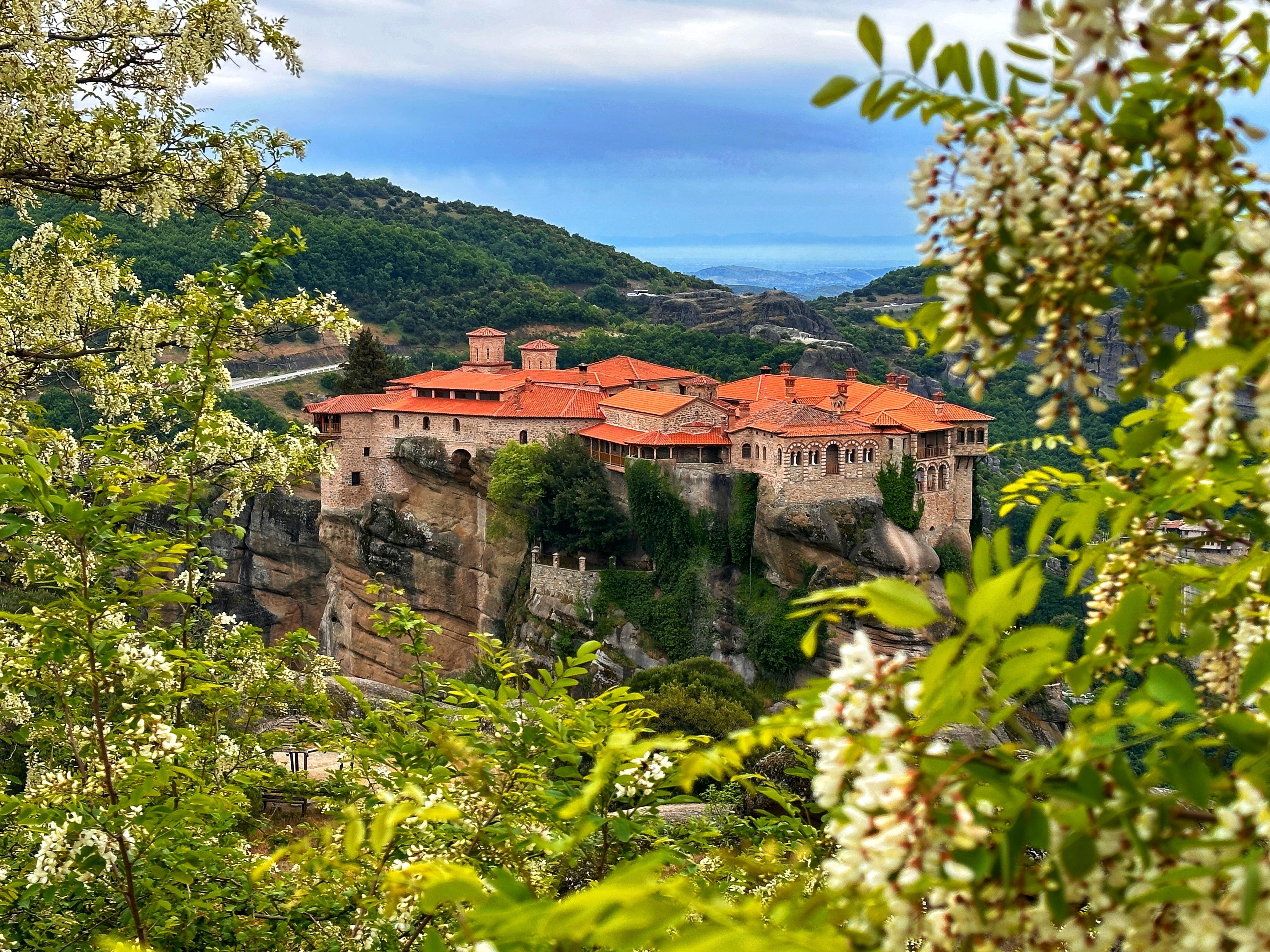
Hermits seeking divine solitude first scaled Meteora's sandstone pillars in the ninth century, inhabiting natural caves and crevices high above the Thessalian plain. By the eleventh century, these anchorites had formed loose clusters, but no permanent structures existed until 1344, when Athanasios Koinovitis, a monk fleeing Serbian expansionism and Ottoman raids, climbed the tallest rock and founded the Great Meteoron monastery. He named it after the Greek word meteorizo—to suspend in air—a reference to the vertical isolation that defined monastic life here for six centuries. Access required rope ladders and net-hauled baskets, a deliberate barrier that reinforced the ascetic ideal. The fourteenth and fifteenth centuries brought a construction surge as twenty-four monasteries rose on separate pinnacles, funded by Serbian and Byzantine nobility seeking spiritual insurance during political collapse. Varlaam monastery appeared in 1518, built atop ruins left by a hermit of the same name a century earlier. Roussanou, perched on a slender column, opened in 1545 and remains one of the few continuously inhabited by nuns since 1988. Ottoman tolerance allowed the monasteries to survive where other Christian institutions did not, though taxation and conscription pressures gradually emptied them. By 1900, only four retained functioning communities. Stone staircases replaced rope systems in the 1920s, a modernization that fractured monastic consensus—some abbots saw infrastructure as apostasy, others as survival. The 300 steps leading to most monasteries today date from that compromise. German occupation during 1941–1944 saw Varlaam shelled for suspected resistance activity, damaging frescoes that had survived four centuries intact. UNESCO designation in 1988 brought conservation funding but also mass tourism, a tension the 5-euro entrance fee attempts to manage. The meteora day trip from athens by train now delivers thousands of visitors weekly to a landscape designed for fewer than a hundred contemplatives, preserving medieval architecture while inverting its original purpose.
Hermits occupy natural caves in Meteora's sandstone cliffs, marking the site's first religious use.
Athanasios Koinovitis founds Great Meteoron monastery atop the highest rock, establishing the first permanent monastic structure.
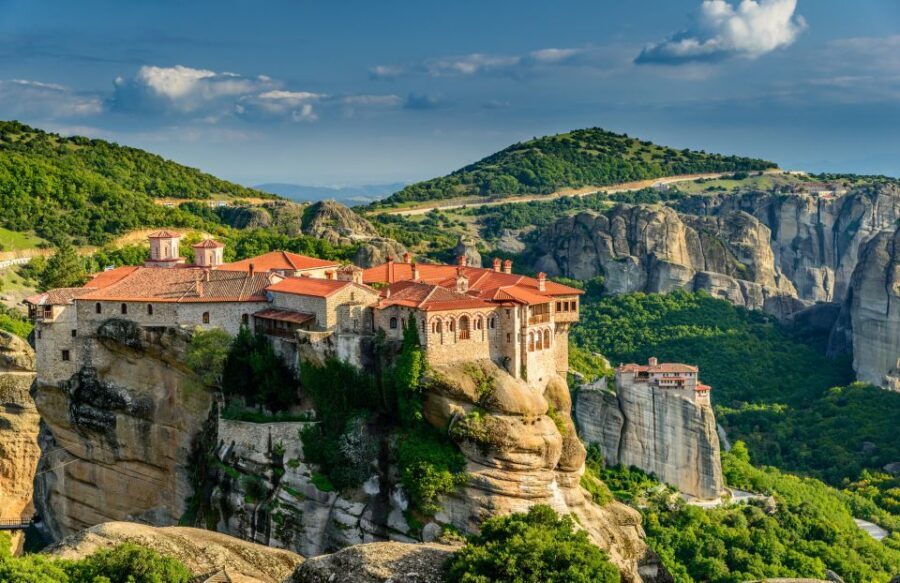
Varlaam monastery constructed on ruins of earlier hermitage, becoming one of the wealthiest Meteora foundations.
Roussanou monastery opens on a narrow pinnacle, later transitioning to a female monastic community in 1988.
Stone staircases replace rope-and-basket access systems, modernizing entry to the clifftop monasteries.
German forces shell Varlaam during occupation, damaging Byzantine frescoes and structural elements.
UNESCO designates Meteora a World Heritage Site, initiating conservation programs and regulating visitor access.
Six monasteries remain active with resident monks and nuns, balancing devotional life against 1.5 million annual visitors.
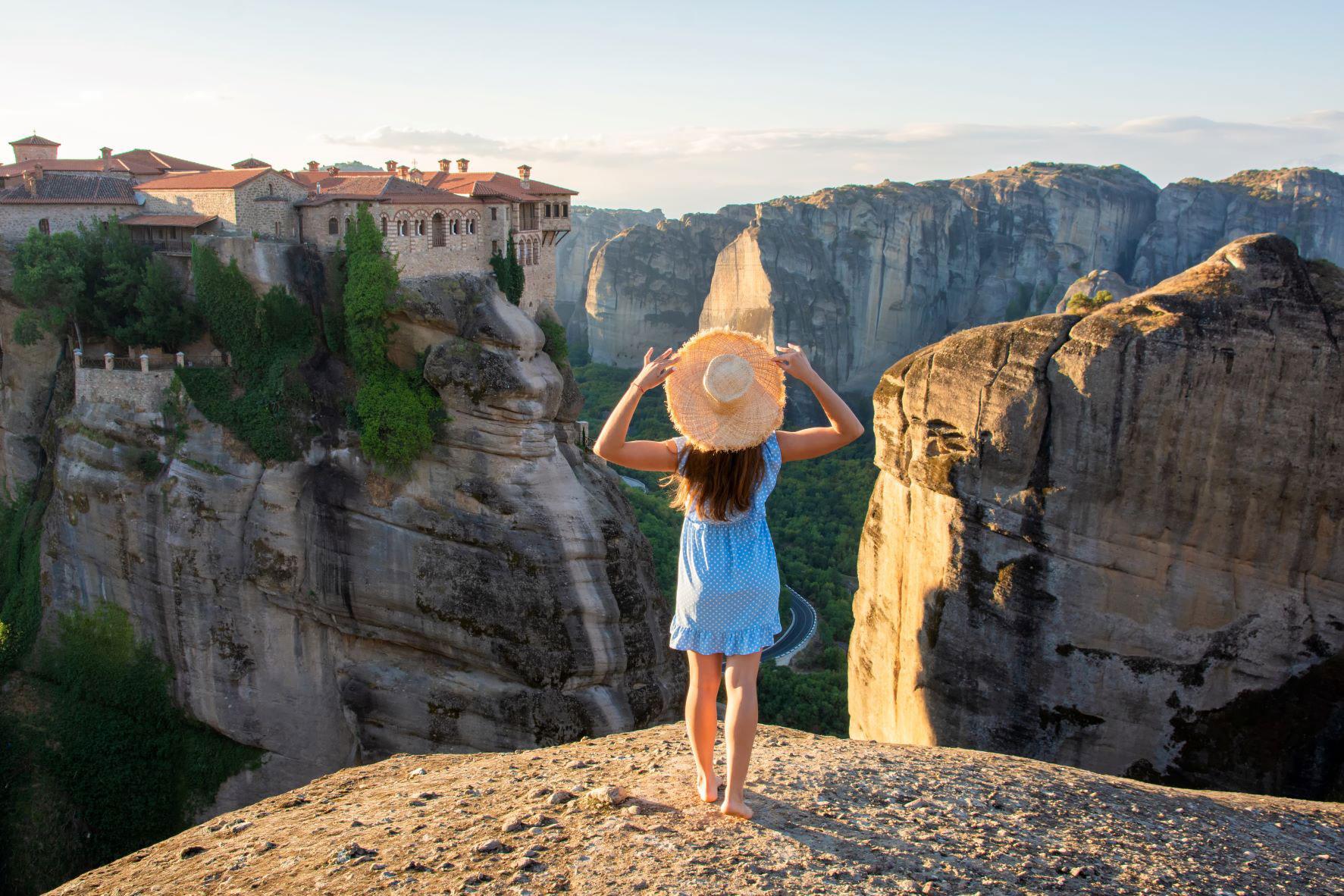
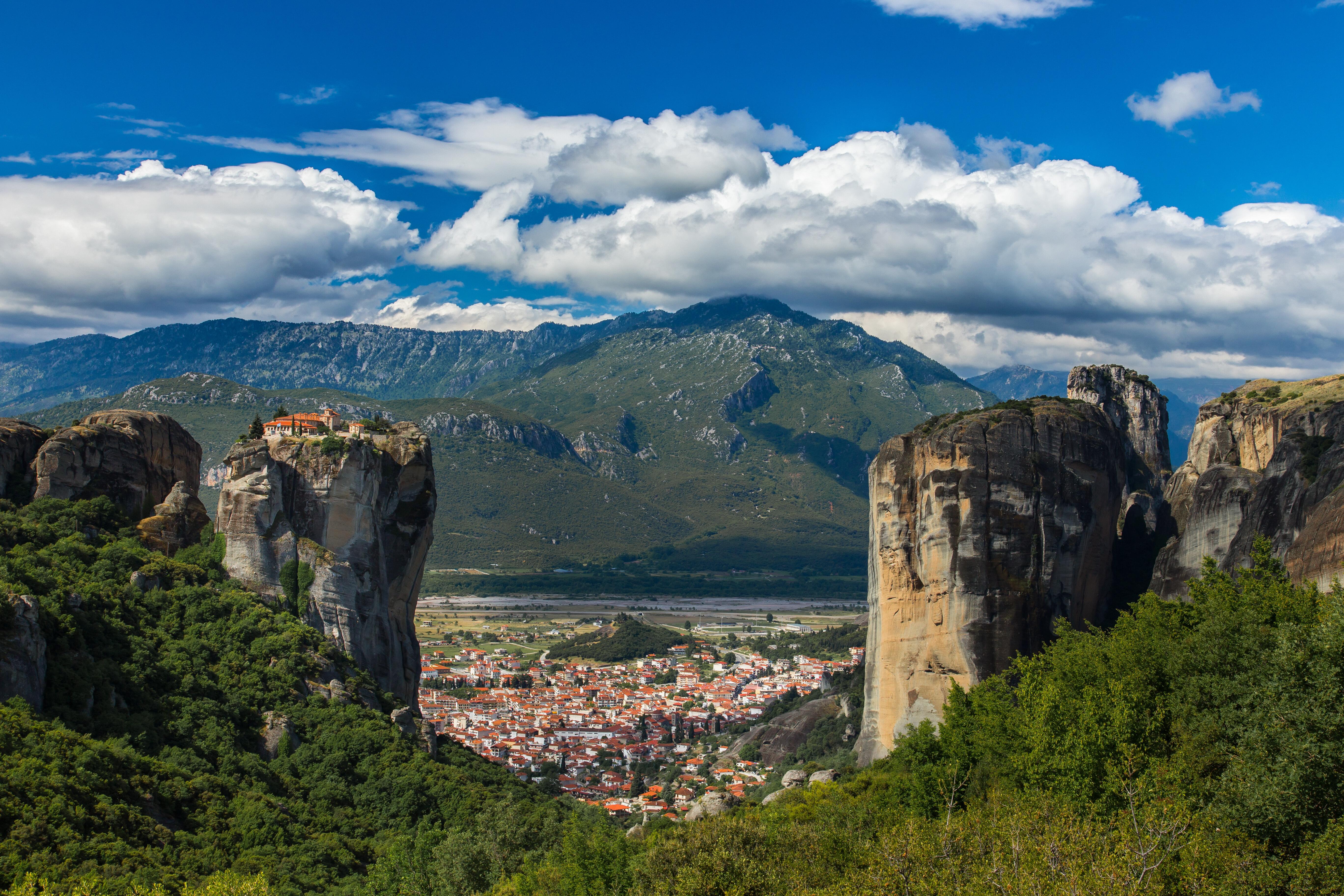
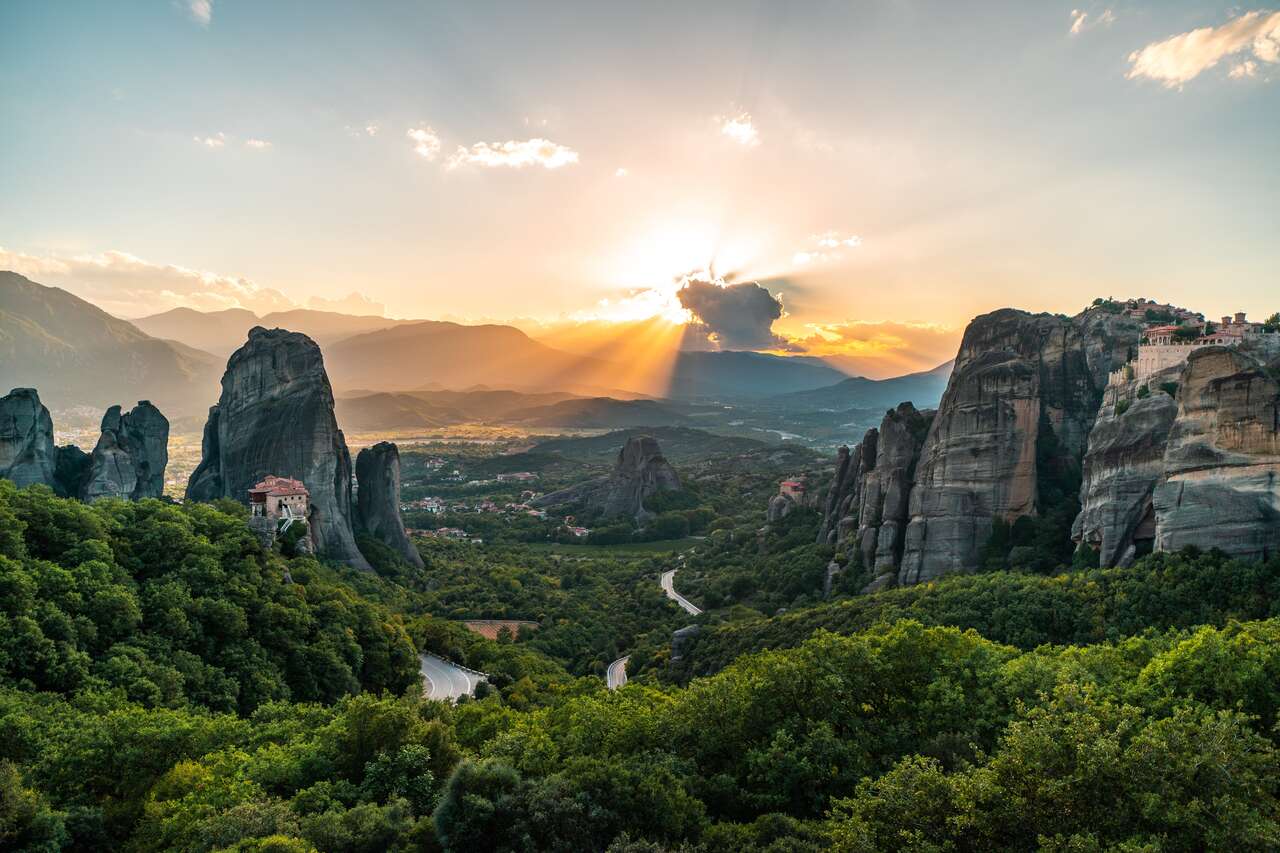
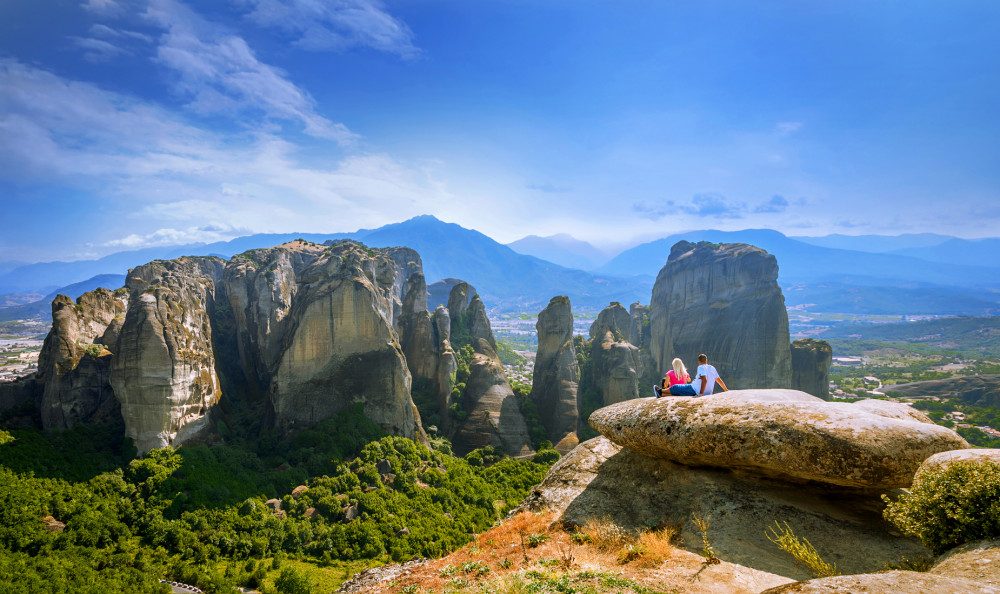
This panoramic spot offers a wide-angle perspective of the rock pillars and the surrounding UNESCO heritage landscape. It is accessible via a short walking path from the main road, making it a highlight for any meteora day trip from athens by train.
Position your camera here for a low-angle shot that captures the sheer verticality of the stone cliffs. Photographers often use this vantage point to frame the stone architecture against the sky for their meteora day trip from athens by train tours.
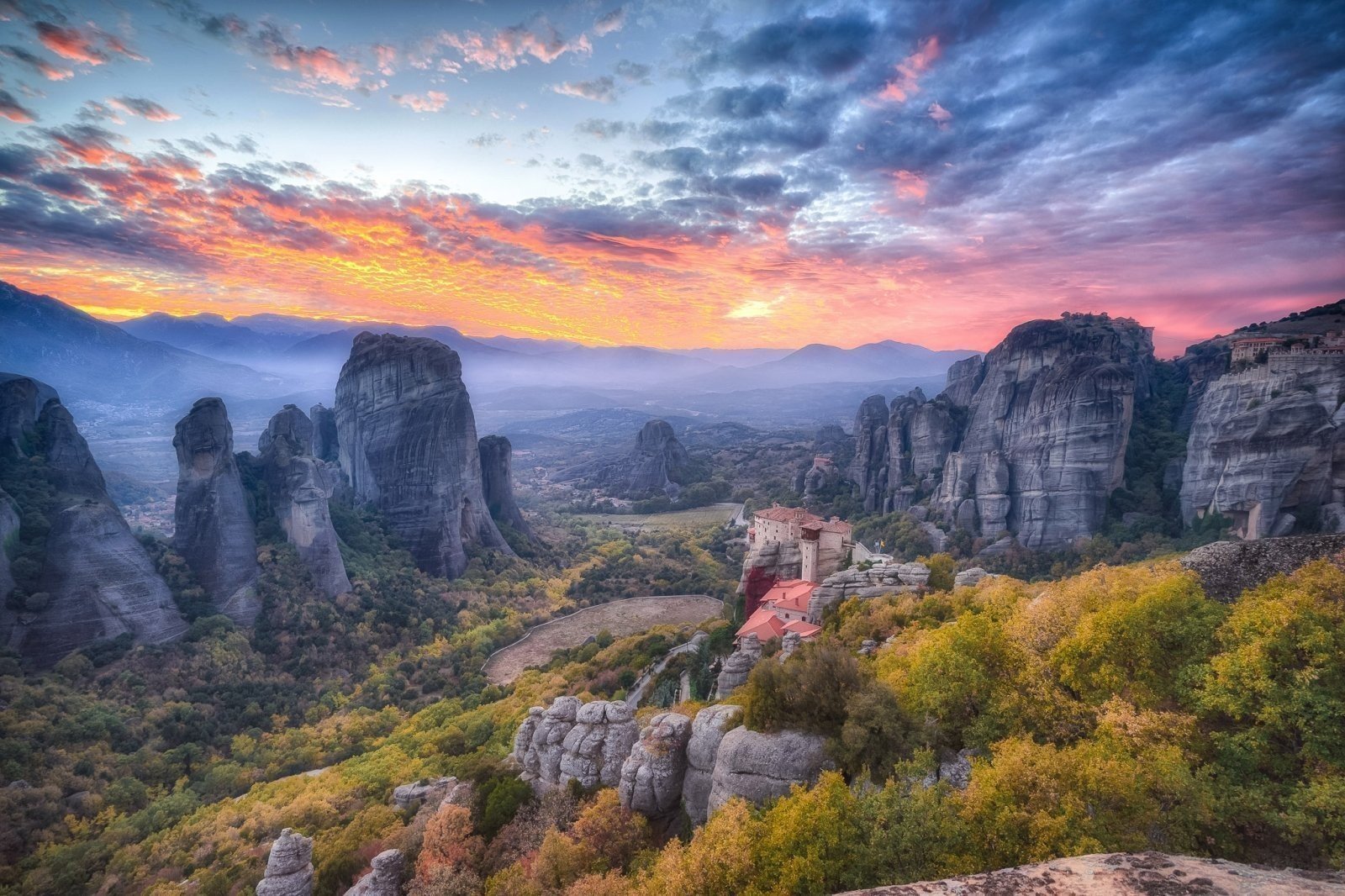
Also known as Kastraki viewpoint, this flat rocky expanse provides the clearest horizon for wide shots as the sun dips behind the mountains. It is a favored location for those seeking professional-grade imagery during a meteora day trip from athens by train tour.
Capture the complex's interior courtyard and arched doorways, though please note that photography is restricted within chapel interiors. These stone paths and elevated balconies are central to many meteora day trip from athens by train tickets.
Planning a meteora day trip from athens by train requires balancing rail schedules with the physical demands of these vertical UNESCO heritage landmarks. Managing energy levels is essential when navigating the rugged terrain with children.
Strollers are not practical due to the 300 steps and uneven mountain paths, so bring a structured baby carrier for younger children. This ensures mobility during your meteora day trip from athens by train tours without relying on accessible routes that do not exist here
School-aged children typically manage the climb better, as the 300 steps require sustained effort and focus. If you book a meteora day trip from athens by train tour, confirm that your group pace allows for frequent breaks during the ascent
There are no baby-change facilities or dedicated family rooms available within the monastery complexes. Prepare for a full day of travel by carrying necessary supplies in a compact backpack during your meteora day trip from athens by train tickets purchase and transit
Aim for the best arrival window of 09:00–10:30 to avoid peak heat and crowds, which helps keep children regulated. Slowing the pace at these monastic sanctuaries prevents fatigue and allows kids to appreciate the sheer scale of the sandstone pillars
Pack sufficient water and snacks, as on-site options are extremely limited compared to the nearby village of Kalabaka. Eating before or after your climb is recommended to avoid carrying heavy bags during the vertical trek.
Finding quality meals is simple when planning a meteora day trip from athens by train, as the town of Kalabaka sits directly at the base of these stone pillars. While the monastic sites offer limited provisions, the town provides diverse tavernas that cater perfectly to those arriving on the meteora day trip from athens by train tours.
Located near the main square, this spot is ideal for a post-hike meal featuring local moussaka and grilled meats. It handles large groups well, making it a reliable choice for visitors on a meteora day trip from athens by train tour.
Everything you need to know for your journey
The monasteries are open daily from 09:00–16:00. These hours apply to all monastery sites. The 5 EUR conservation fee per person, per monastery is typically separate from your train and tour tickets. Please carry cash for these payments. Accessing the sites involves climbing 300 steps carved into the rocks. Prepare for physical exertion during your visit. Yes, modest clothing is mandatory for a meteora day trip from athens by train. Shoulders and knees must be covered for entry. We recommend arriving between 09:00–10:30. This window helps you avoid mid-day crowds. Large bags are prohibited inside the monasteries. Keep your belongings compact for the journey. Children are welcome but should be capable of handling the 300 steps and uneven terrain. Photography is allowed outside, but strictly forbidden inside the churches of the monasteries. Always check local rules upon entry. The address for the area is Kalabaka 422 00, Greece. This is the central hub for travelers. You must pay the 5 EUR conservation fee in cash at the entrance of each individual monastery.
Please contact us for more information.
Prehistoric site with human occupation evidence
Easily accessible monastery near the road
Traditional village streets and local dining
Upscale hotel with pillar views
Quiet guesthouse near the hiking trails
Convenient district near train station
Join thousands of happy travelers who have discovered this incredible experience
Book Your Experience Now