14 hr
Meteora Monasteries Full-Day Tour from Athens
- Expert local guide
- Small group
- Skip-the-line access
- Free cancellation
Meteora Day Trip From Athens — Guided Tours & Train Tickets
Byzantine monasteries suspended on sandstone pillars, four hours north of the capital
Compare fares, pick the fit — all bookings are mobile-voucher and eligible for free cancellation where shown.
14 hr
14 hr
14 hr
| Experience | From | Duration | Rating | Skip-the-line | Guide | Small group | Price | |
|---|---|---|---|---|---|---|---|---|
|
Guided Experience
Most popular
Meteora Monasteries Full-Day Tour from Athens
|
Athens | 14 hr | ★ 4.7 | ✓ | ✓ | ✓ | €84 | Book → |
|
Guided Experience
Meteora Monasteries Full-Day Tour from Athens
|
Athens | 14 hr | ★ 4.8 | ✓ | ✓ | ✓ | $85 | Book → |
|
Guided Experience
Meteora Monasteries Full-Day Tour from Athens
|
Athens | 14 hr | ★ 4.7 | ✓ | ✓ | ✓ | $96 | Book → |
Worth it for culture seekers despite long transit
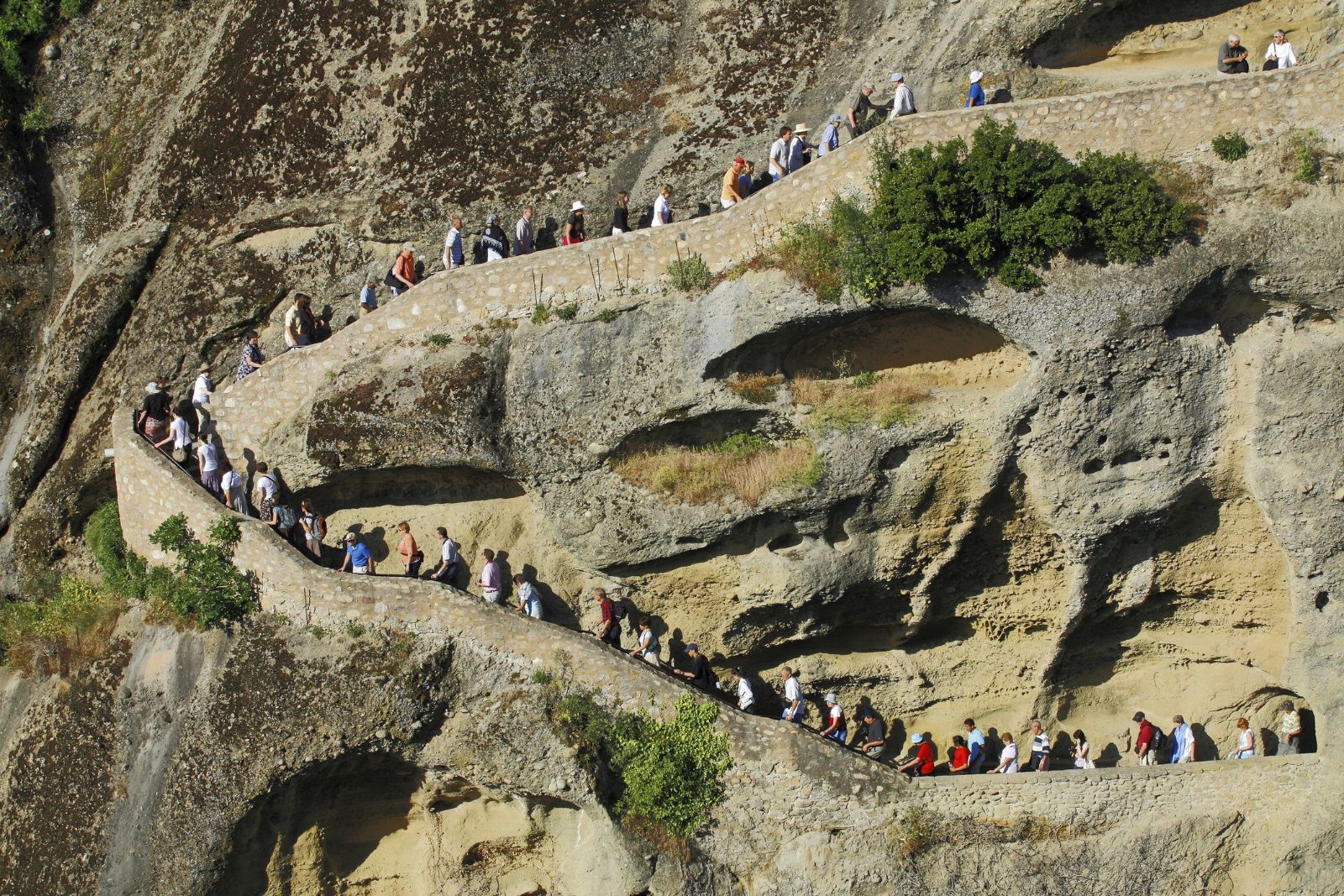
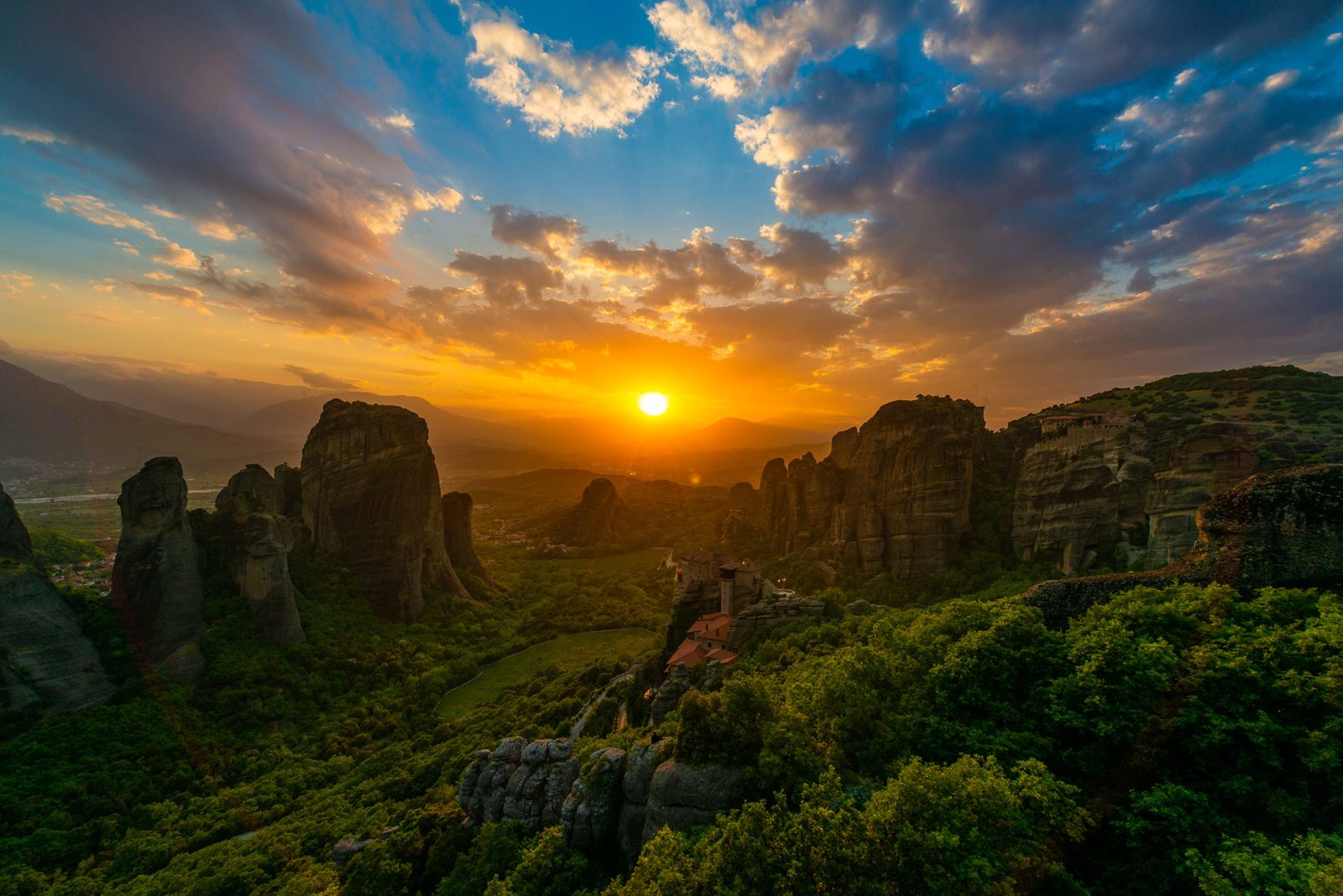
A meteora day trip from athens demands roughly nine hours round-trip by road or rail, leaving only four to five hours at the monasteries themselves. That commitment pays off if you value Byzantine heritage and geological drama — the rock pillars rising 400 meters above Kalambaka are singular in Europe, and the six active monasteries preserve 14th-century frescoes and manuscripts. You'll climb around 300 steps per monastery (most tours visit two or three), and each charges a €5 conservation fee. The Meteora monasteries tour reveals monastic life suspended between earth and sky, but the tight schedule means you won't linger. If fortress-like architecture perched on vertical cliffs excites you more than an extra Athens museum day, the trade-off works. Skip it if long bus rides drain you or if you prefer urban sightseeing — meteora day trip from athens tickets are best spent by travelers who prioritize natural wonders and religious history over convenience.
Bottom line: The meteora day trip from athens tours justify the long haul if otherworldly landscapes and medieval monasteries rank high on your Greece wishlist.
Hand-picked experiences loved by thousands of travelers
14 hours
Free Cancellation
Travel by train to Greece's stone forest and explore ancient monasteries perched atop towering rock formations
14 hours
Free Cancellation
Journey to UNESCO-listed Meteora to discover ancient monasteries perched on dramatic rock pillars
14 hours
Free Cancellation
Journey to UNESCO-listed Meteora to witness six clifftop monasteries and explore three interiors with a local guide
14 hours
Free Cancellation
Full-day excursion to UNESCO-listed Meteora with live Spanish commentary, monastery visits, and traditional Greek meal
14 hours
Free Cancellation
Journey to UNESCO-listed Meteora to visit clifftop monasteries, ancient hermit caves, and enjoy seaside dining
2 days
Free Cancellation
Explore ancient monasteries perched on dramatic cliffs, hidden hermit caves, and sunset vistas on this immersive overnight adventure from Athens
2 days
Free Cancellation
Discover clifftop monasteries and sunset vistas on a two-day escape from Athens with accommodation included
12 hours
Free Cancellation
Discover ancient cliff-top monasteries and dramatic rock formations on this UNESCO World Heritage adventure
The oldest and largest monastery, built in the 14th century, requiring 300 steps to reach.
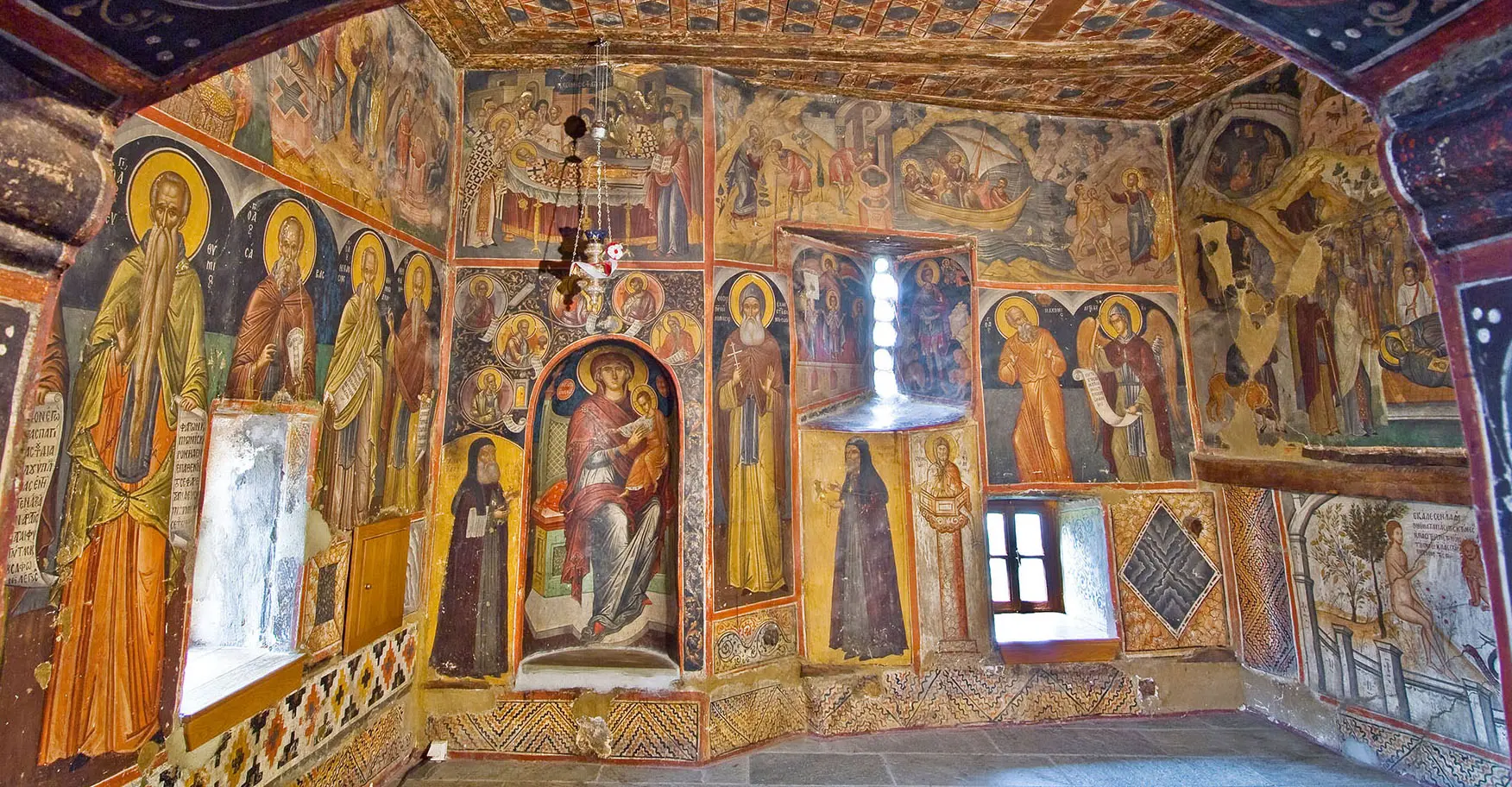
This site is known for its intricate frescoes and historical barrel-vaulted ceiling.
A smaller, intimate monastery featuring exceptional art by Theophanes the Cretan.
All the details about your upcoming adventure in one place
A meteora day trip from athens brings you to the UNESCO-listed monasteries perched atop dramatic rock pillars in central Greece. The journey from the capital covers 350 kilometers through Thessaly, offering access to Byzantine frescoes, clifftop chapels, and panoramic views across the Pindus foothills. Guided meteora day trip from athens tours typically include transport, monastery entrance, and stops in Kalambaka village.
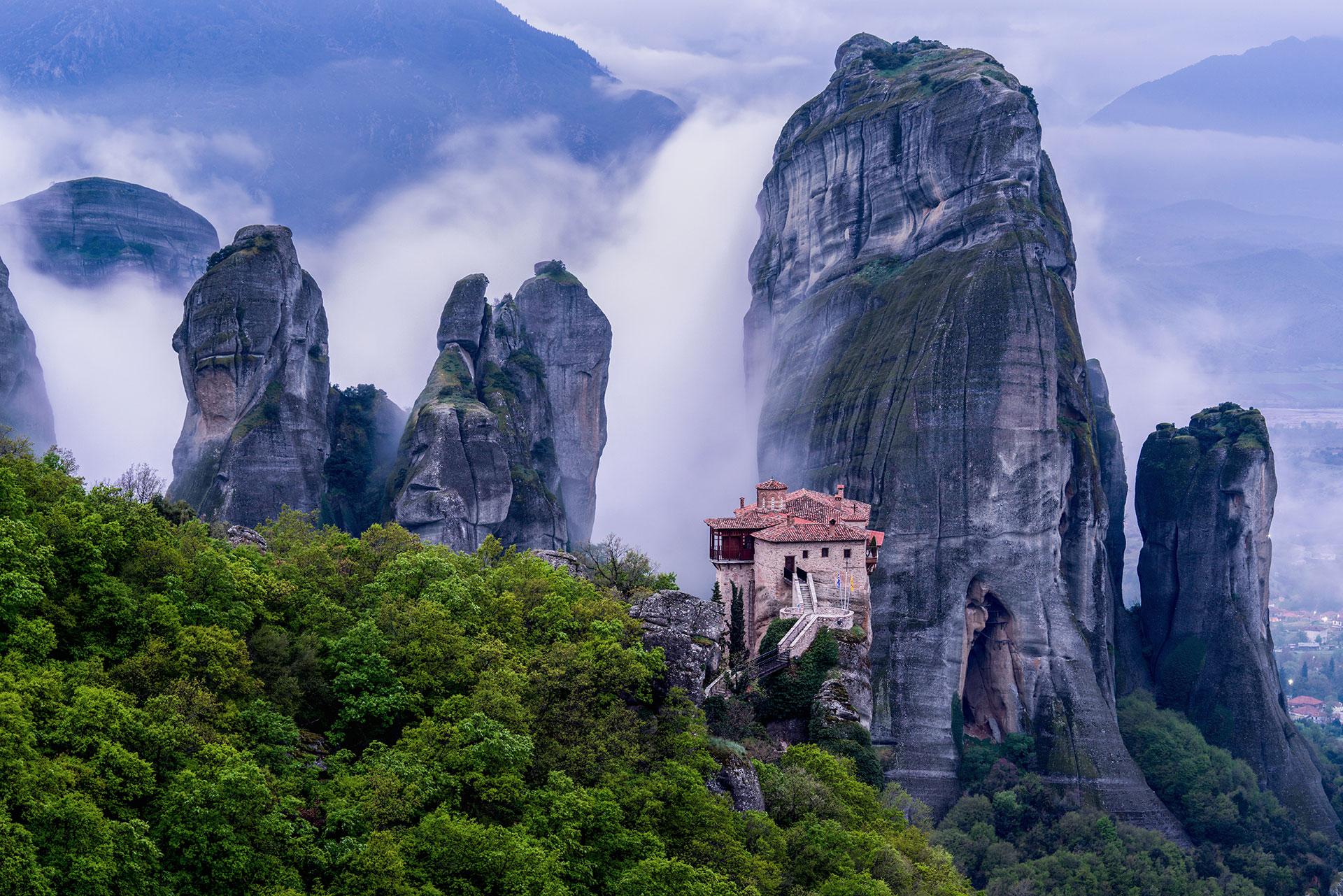
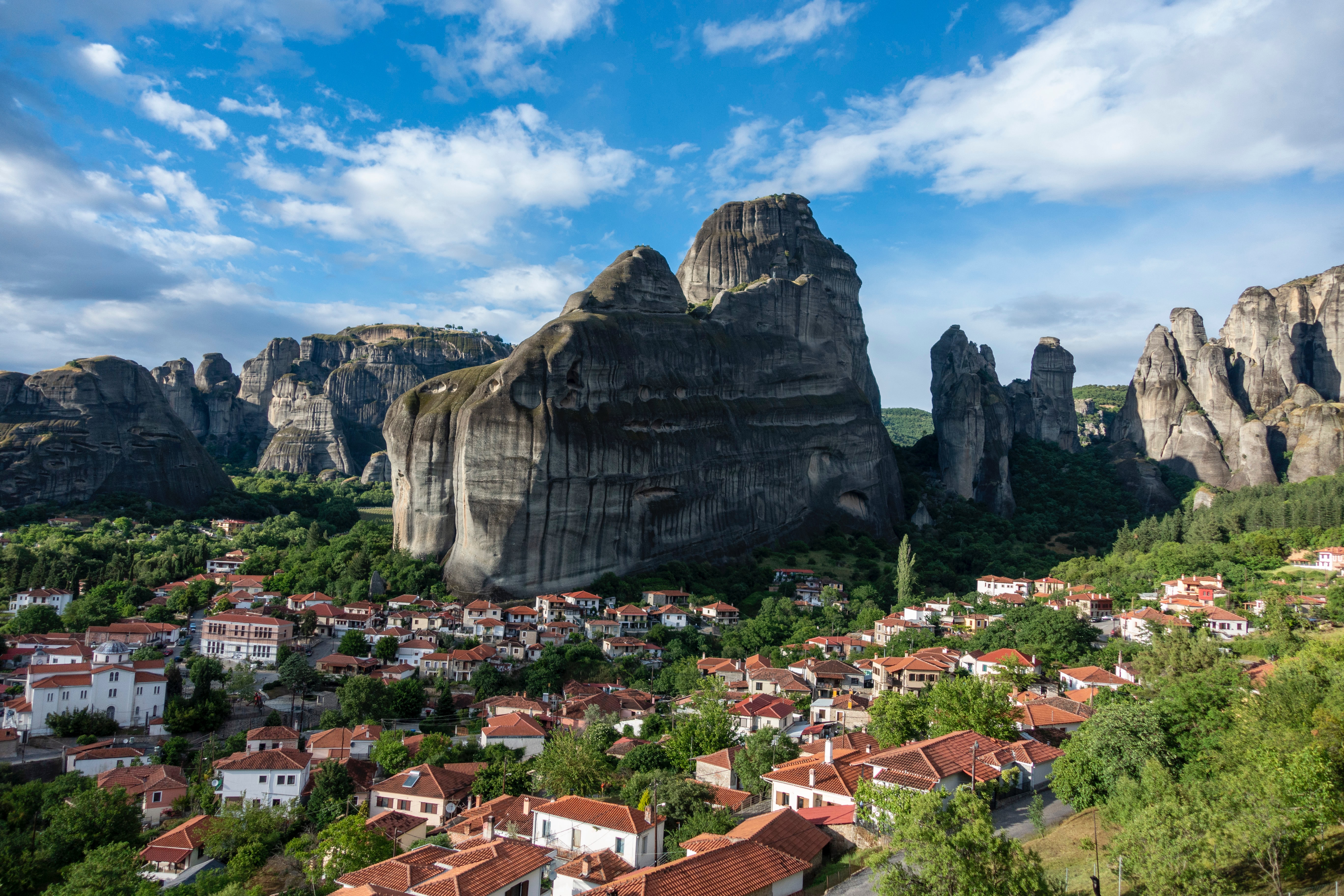
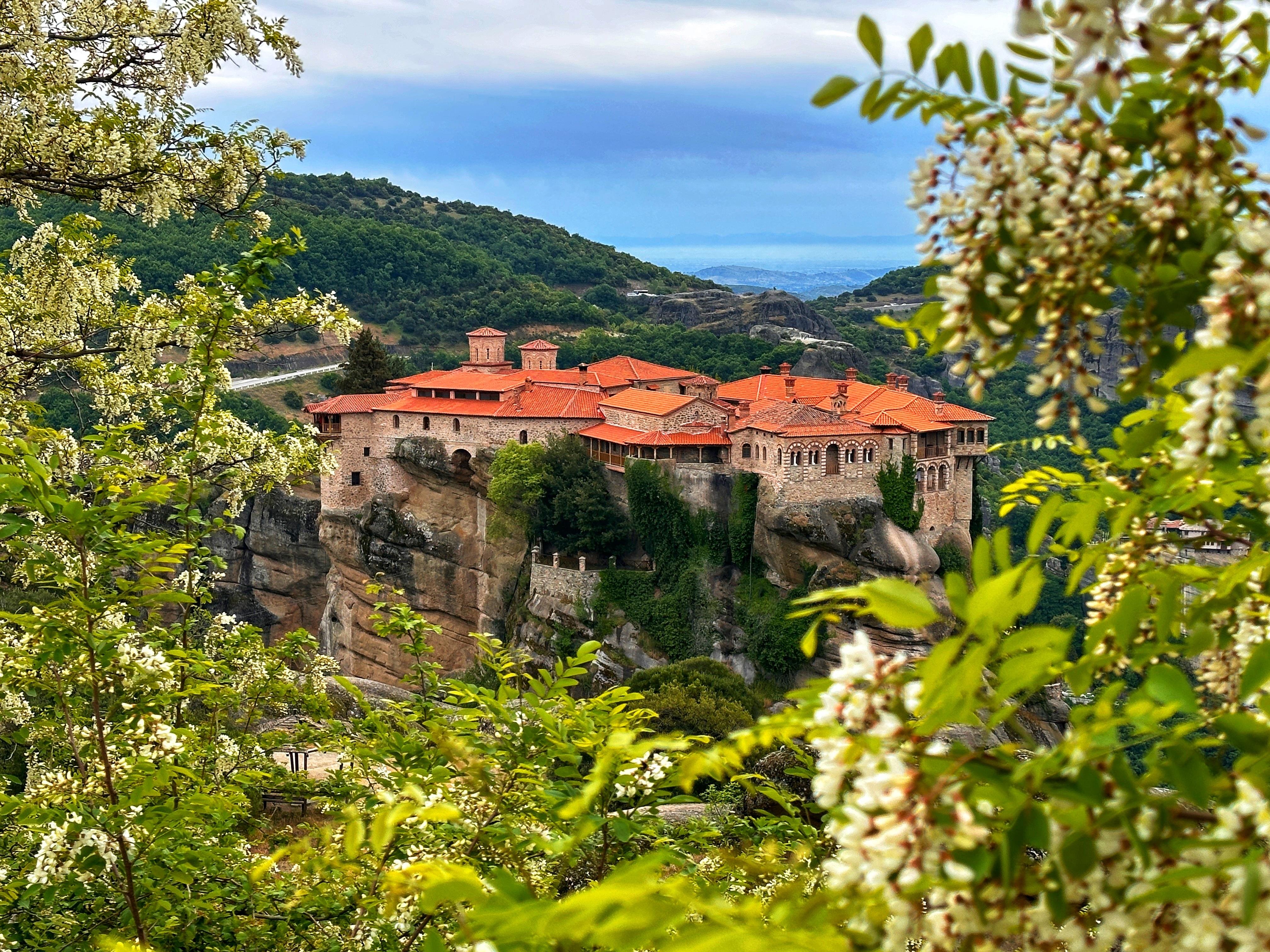
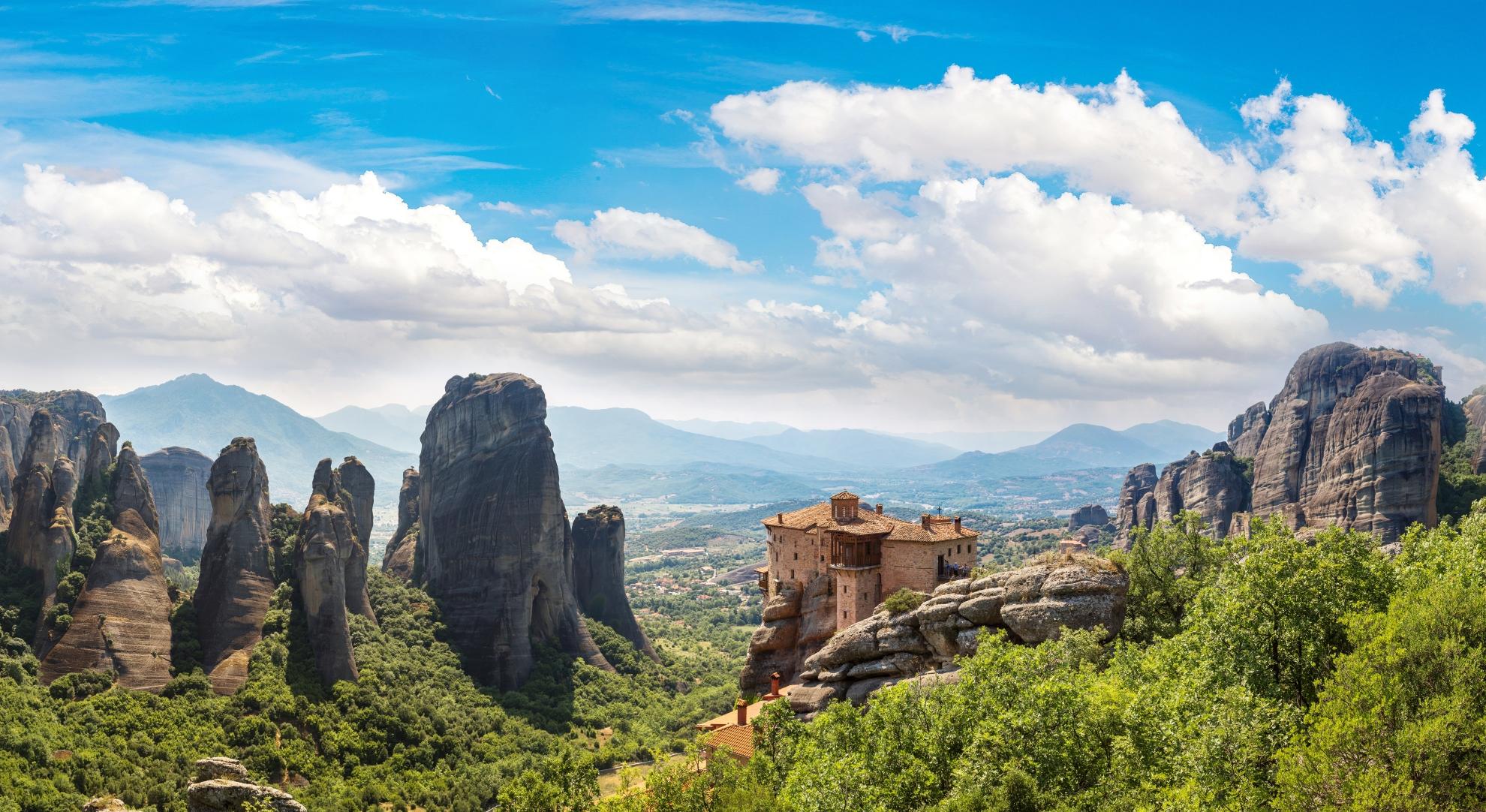
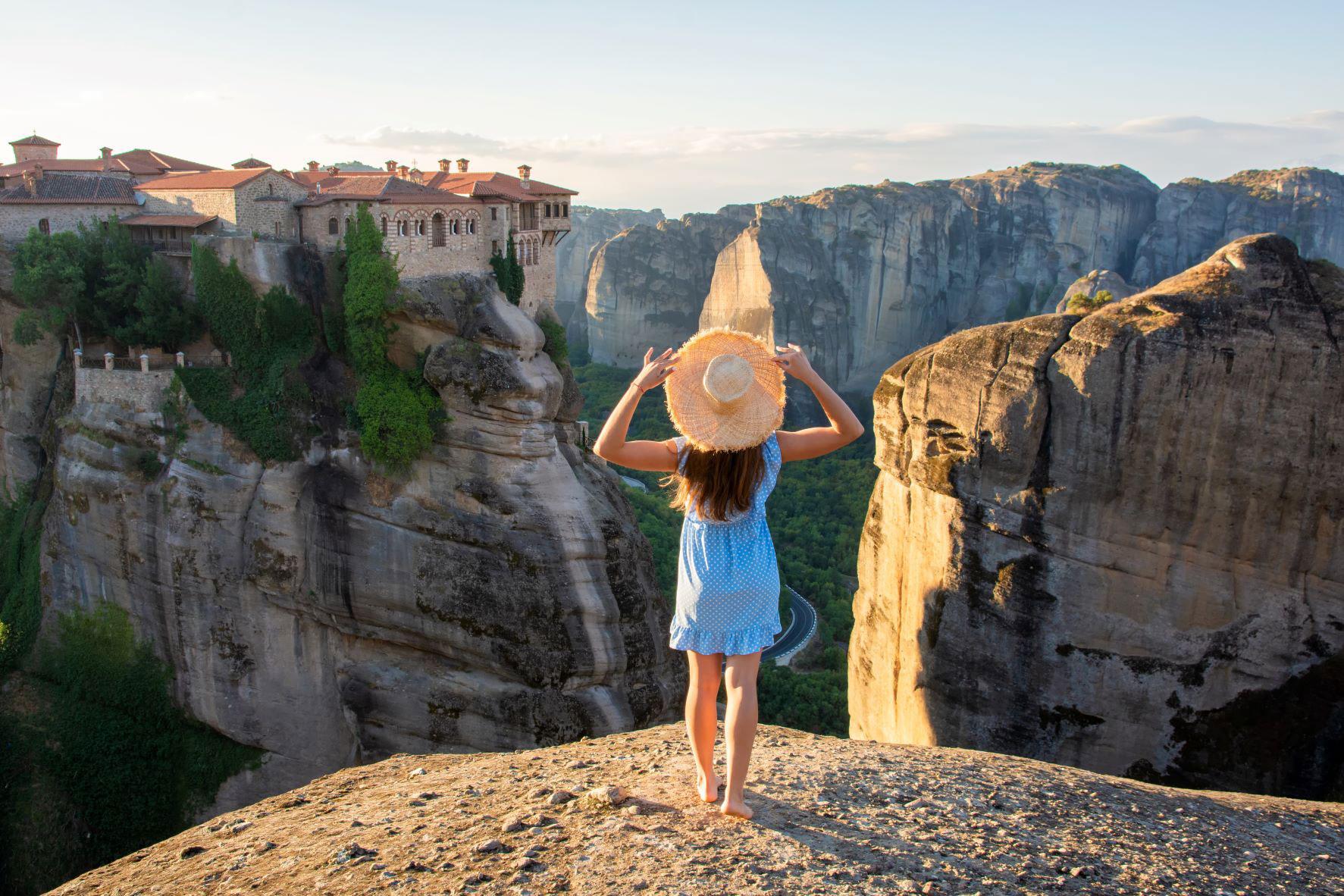
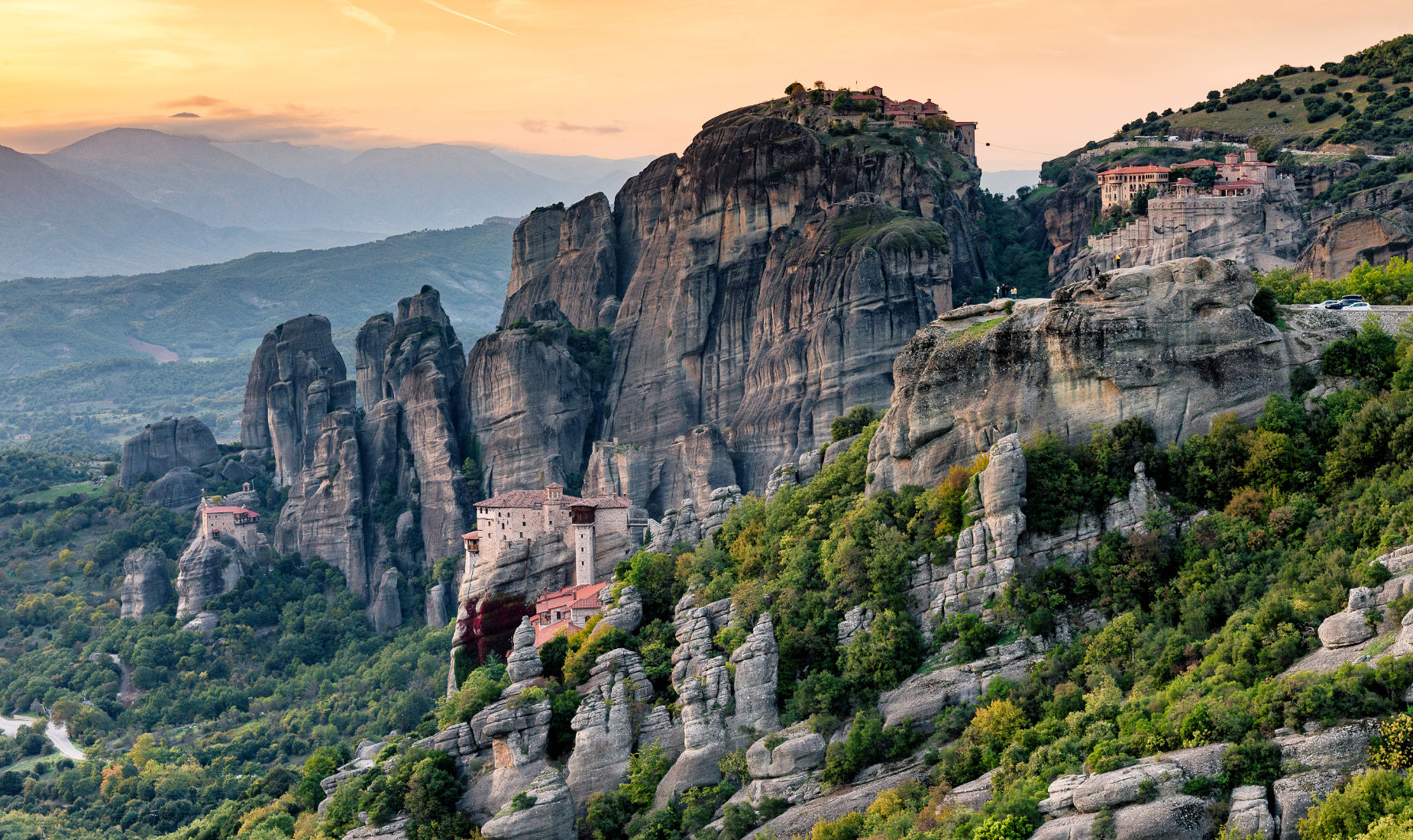
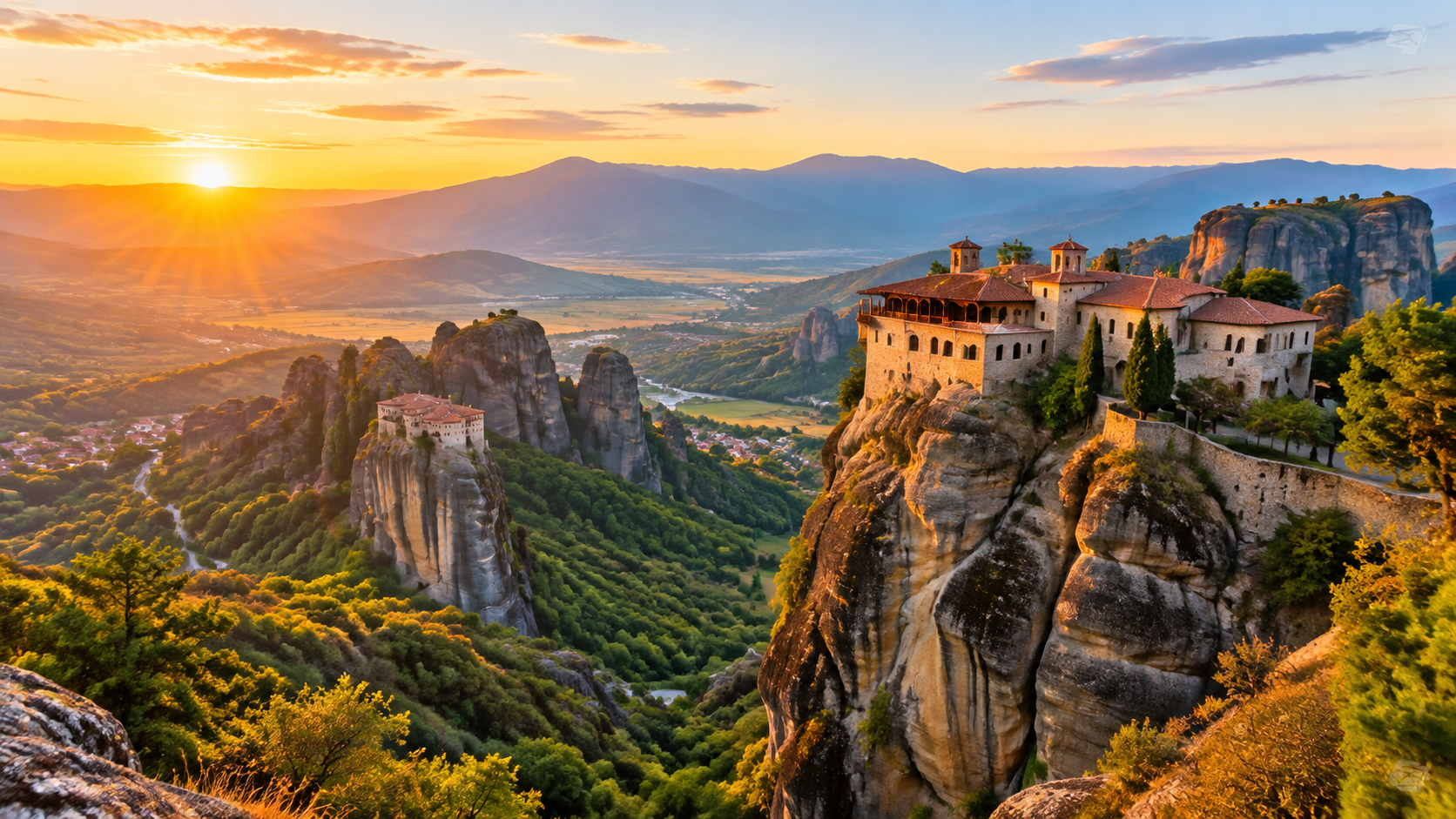
Six Eastern Orthodox monasteries cling to vertical rock formations 400 metres above the Thessalian plain, their foundations mortared directly into sandstone summits that began forming 60 million years ago.
Hermit monks settled in the Meteora fissures during the 11th century, hoisting building materials by rope and pulley; the oldest surviving structure, Great Meteoron, was consecrated in 1388. By the 16th century, twenty-four monasteries operated here—today six remain active, housing small monastic communities and conserving frescoes that escaped Ottoman-era looting.
Meteora gained UNESCO World Heritage status in 1988 for its dual significance: geological rarity and proof of Byzantine resilience during centuries of invasion. The rocks themselves are conglomerate pillars—river sediment compressed under a prehistoric lake, then exposed by tectonic uplift and millennia of erosion. Modern visitors access five of the six monasteries via paved roads and stone staircases carved in the 1920s; the sixth, Agia Triada, retains its original 140-step approach hewn into the cliff face. Conservation fees support fresco restoration and structural reinforcement against seismic activity.
A meteora day trip from athens by train departs Larissa Station at 07:30, reaching Kalambaka in four hours; buses from Liosion Terminal take five. Guided excursions typically visit three monasteries—Great Meteoron for its katholikon dome, Varlaam for its ascension tower, and Roussanou for its cliffside position. Independent travellers using local buses or taxis can extend visits to Agios Nikolaos Anapafsas, known for Theophanis Strelitzas's 16th-century martyrdom frescoes. The monasteries operate on staggered schedules; at least four remain open each day. Monks enforce a modest dress code—long skirts for women, covered shoulders for all—and photography restrictions apply inside chapels.
Autumn light softens the Pindus foothills, and September crowds thin after the peak pilgrimage season. The site's vertical drama has attracted film crews since the 1981 Bond production *For Your Eyes Only*; climbing is now restricted to designated sport routes west of the monasteries. Kalambaka's tavernas serve trahanas soup and local tsipouro, but serious dining concentrates in Trikala, 21 kilometres south.
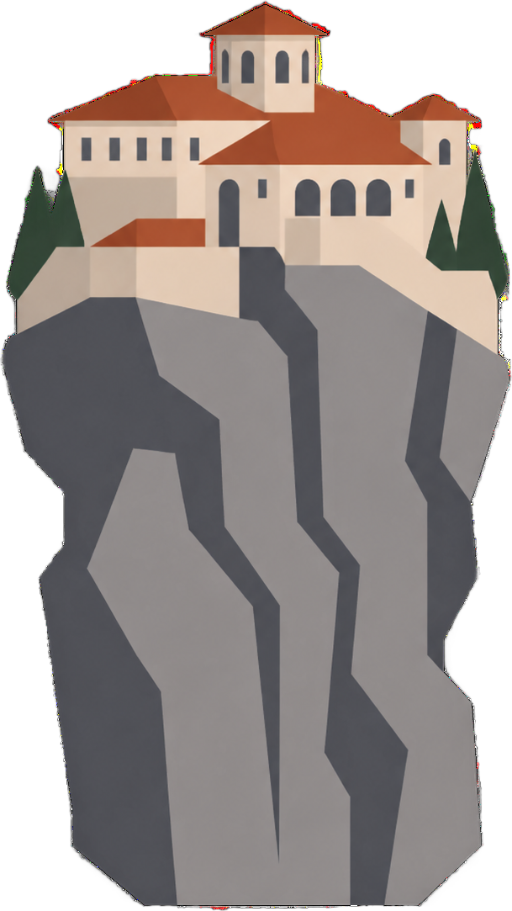
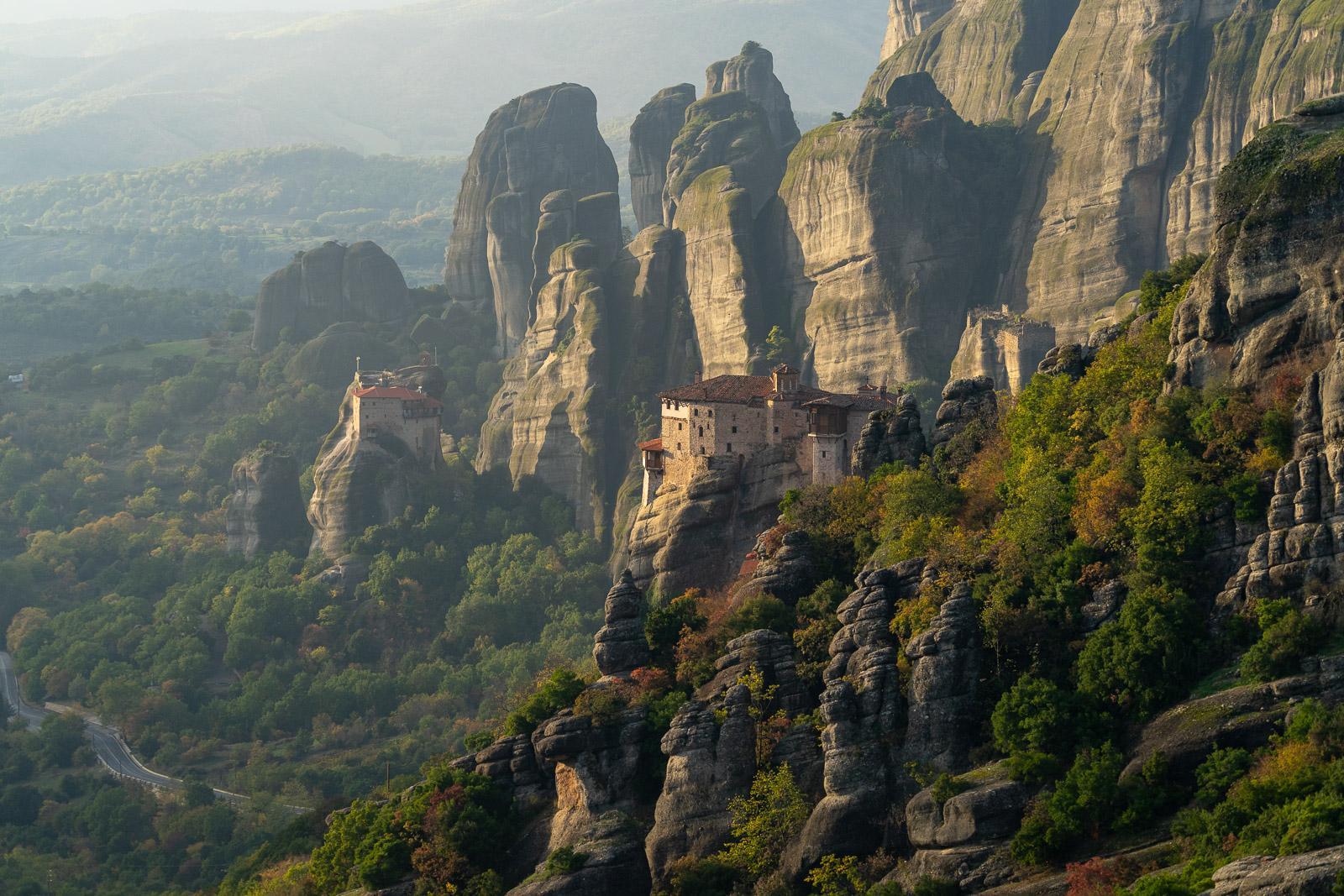
Six monasteries cling to vertical rock formations 400 metres above the Thessalian plain, their foundations mortared directly into sandstone summits that began forming 60 million years ago.
Many tour operators for a meteora day trip from athens offer free cancellation up to 24–48 hours before the scheduled departure. Entrance fees are generally paid in cash directly at the monasteries and are non-refundable by the site operators.
Weather · crowds · average price — dots go green to amber to red as each metric rises.
Mild temperatures and vibrant wildflowers make hiking between the cliffs ideal for a meteora day trip from athens.
Long daylight hours allow for extended views, though midday heat is intense.
September and October offer the most stable weather and harvest-season atmosphere.
Cool, misty conditions provide dramatic, empty photo opportunities of the rock pillars.
Start your meteora day trip from athens at 09:00 to enter before major tour buses arrive.
Keep conversations quiet while walking through the monastic courtyards.
Always carry the 5 EUR conservation fee in cash for each monastery entrance.
Wear sturdy shoes as the ancient stone steps can be slippery.
Check specific closing days for each monastery before building your itinerary.
Meteora's vertical monasteries rose from a hermit's impulse in the ninth century, when ascetics climbed the sandstone pillars to escape both invaders and worldly distraction. By the eleventh century, Byzantine monks had established sketes—small prayer cells wedged into crevices accessible only by rope ladders and net hoists. The first proper monastery, Doúpiani, appeared around 1100, though it survives today only as ruins. Ottoman pressure in the fourteenth century accelerated construction: between 1356 and 1372, the monk Athanasios Koinovitis founded Megalou Meteorou, the Great Meteoron, on the tallest pillar, hauling materials up cliffs using windlasses and wicker baskets. At its height in the sixteenth century, twenty-four monasteries clung to the rocks, each a self-contained fortress of frescoed chapels, libraries, and storerooms. Meteora day trip from Athens itineraries today visit six active monasteries, but the engineering feat remains unchanged: builders carried limestone blocks, timber beams, and fresco pigments up vertical faces without modern machinery. Earthquake damage in 1717 and again in 1858 toppled outlying hermitages, yet the main monasteries endured. Monks defended their isolation fiercely; until the 1920s, visitors ascended only by removable ladders or rope nets, and women were forbidden entry to most complexes. Greek civil war shelling in the 1940s damaged Varlaam's katholikon, prompting the first modern restorations. Road access arrived in the 1960s when the Greek government carved staircases into the rock, opening Meteora to pilgrims and tourists arriving on meteora day trip from athens tours. UNESCO inscribed the site in 1988, recognizing both the monastic architecture and the unique geology—conglomerate pillars shaped by seismic uplift and millennia of erosion. Today, monks and nuns still inhabit the monasteries, maintaining liturgical schedules alongside conservation projects funded by the five-euro entrance fee. The rope baskets hang as museum pieces, but the Byzantine frescoes—some dating to the 1480s—remain vivid under centuries of soot and candle smoke, a fragile record of faith practiced at altitude.
Hermits occupy Meteora's rock pillars, seeking isolation and prayer.
Doúpiani, the first monastery, is founded; only ruins survive today.
Athanasios Koinovitis establishes Megalou Meteorou, the Great Meteoron, on the highest pillar.
Monastic population peaks at twenty-four active monasteries across the rock formation.
Earthquakes damage outlying hermitages; main monasteries withstand the tremors.
Authorities install fixed ladders and bridges, replacing rope-net access for the first time.
Greek government carves stone staircases, opening meteora day trip from athens tickets to wider tourism.
UNESCO inscribes Meteora as a World Heritage Site for its geology and Byzantine monastic architecture.
Dining options are concentrated in the town of Kalambaka, located at the base of the rock pillars near your meteora day trip from athens. While there are no dining facilities at the monastery summits, visitors frequently head into town to enjoy traditional Greek cuisine after exploring these UNESCO heritage sandstone formations.
Located in the heart of Kalambaka, this restaurant serves classic moussaka and local grilled meats. It is a popular spot for those finishing a meteora day trip from athens tours, especially in the early evening.
A family-run establishment offering hearty portions of Greek stew and seasonal vegetable dishes. It serves as an ideal stop for travelers needing a relaxed meal before their return travel with meteora day trip from athens tickets.
Situated near the main road, this venue provides a diverse menu including vegetarian options and traditional pies. Visitors often stop here after completing a guided meteora day trip from athens tour to enjoy views of the cliffs from the terrace.
Everything you need to know for your journey
Yes, shoulders must be covered, and skirts or long trousers are required.
Most tours for a meteora day trip from athens handle logistics, but monastery entrance is typically paid at the gate.
Some monasteries require climbing 300 steps to reach the entrance.
Yes, children are welcome on a meteora day trip from athens, though parents should supervise them on stairs.
Photography is allowed in courtyards but forbidden inside the churches.
You may carry snacks, but consumption inside the monasteries on a meteora day trip from athens is discouraged.
Avoid arriving at midday or during peak summer hours to minimize heat and crowds.
A meteora day trip from athens is a significant journey that offers unique access to UNESCO-listed history.
Prehistoric cave site known for significant archaeological findings.
One of the smaller, easily accessible monasteries with beautiful frescoes.
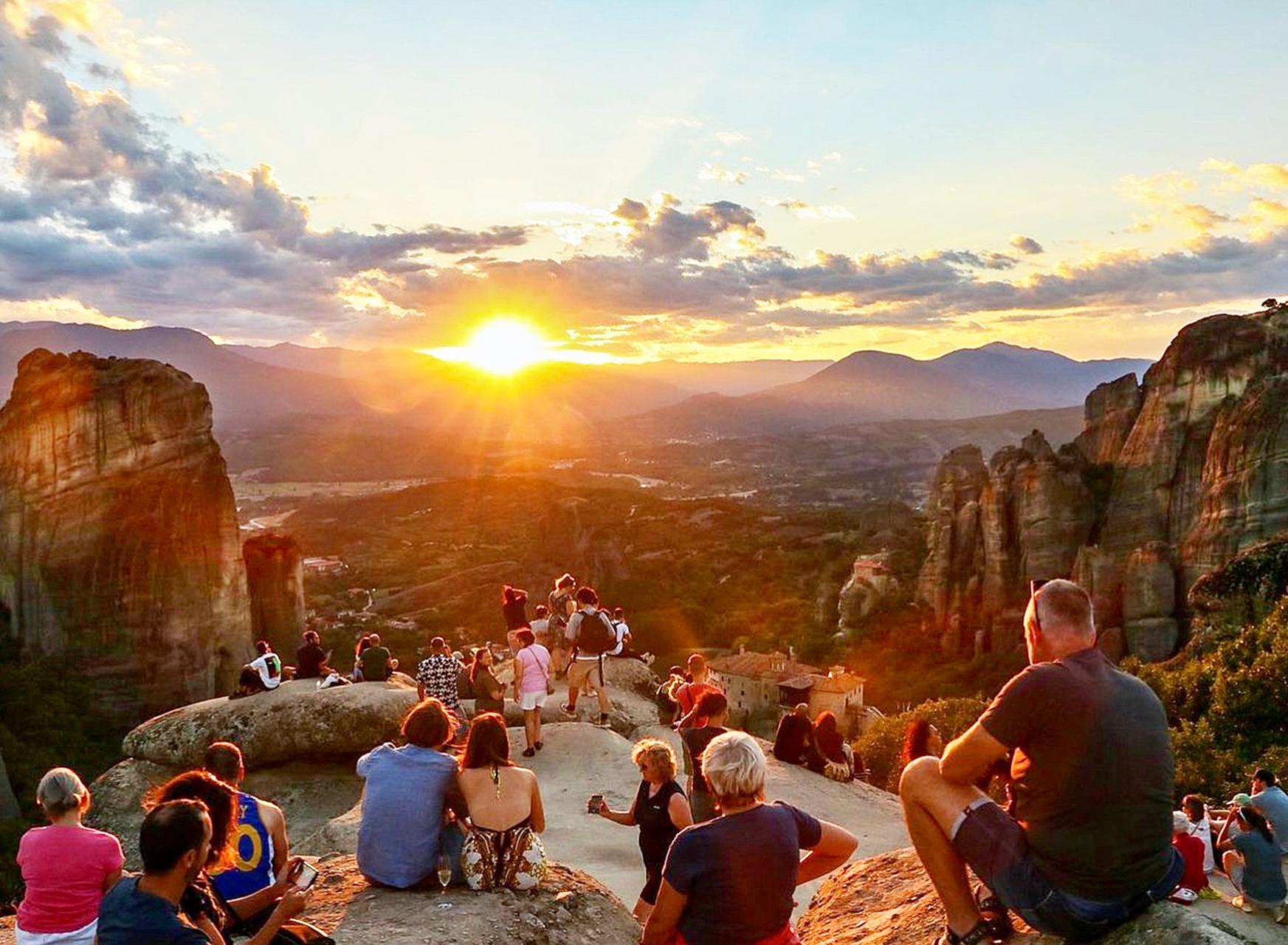
A popular natural balcony offering views of the rock pillars at dusk.
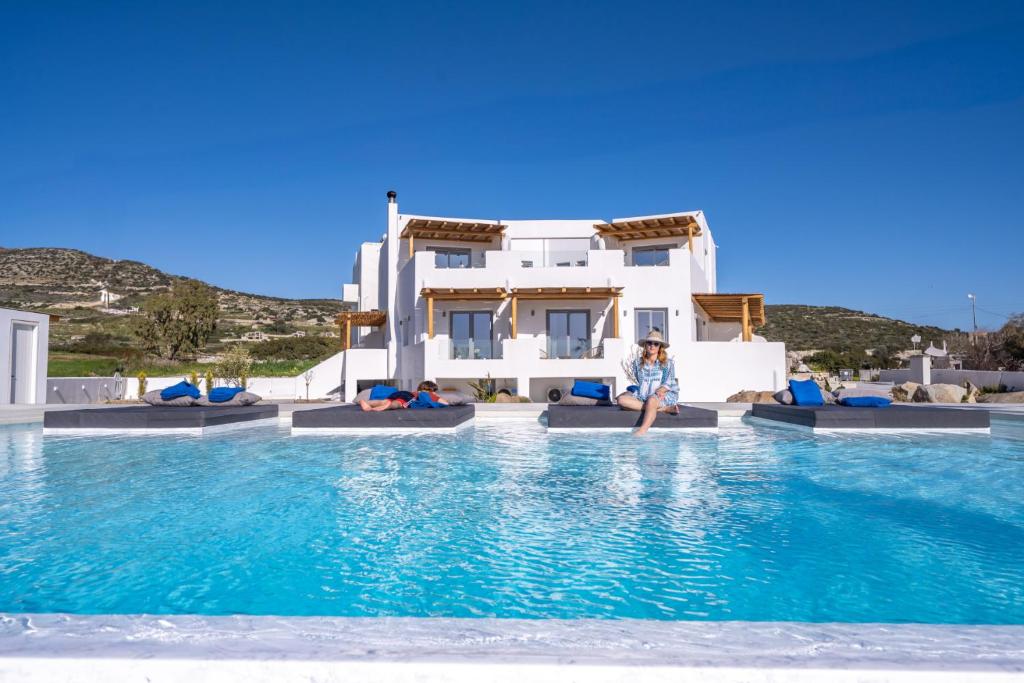
High-end stay with direct views of the cliffs.
Join thousands of happy travelers who have discovered this incredible experience
Book Your Experience Now